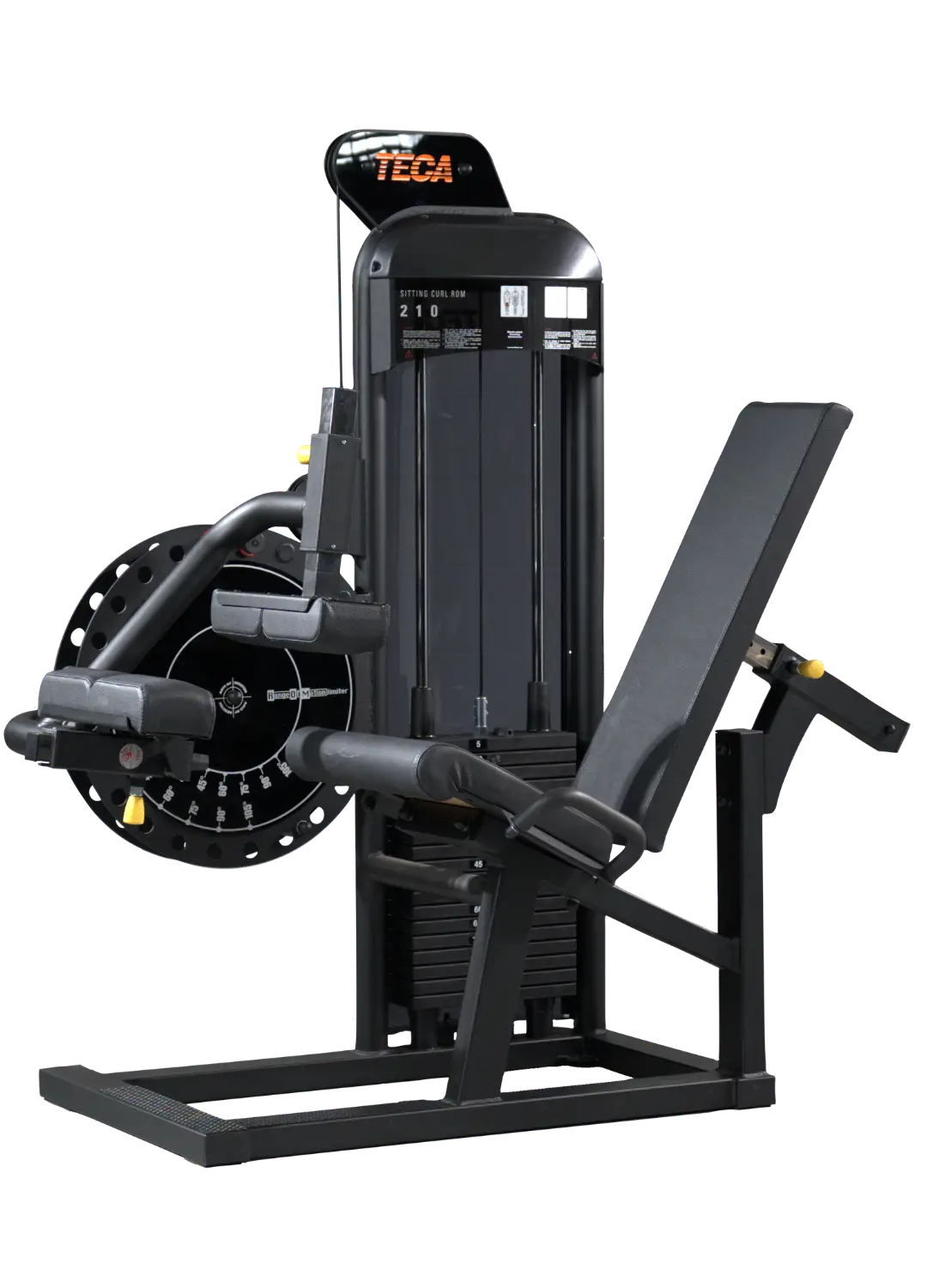
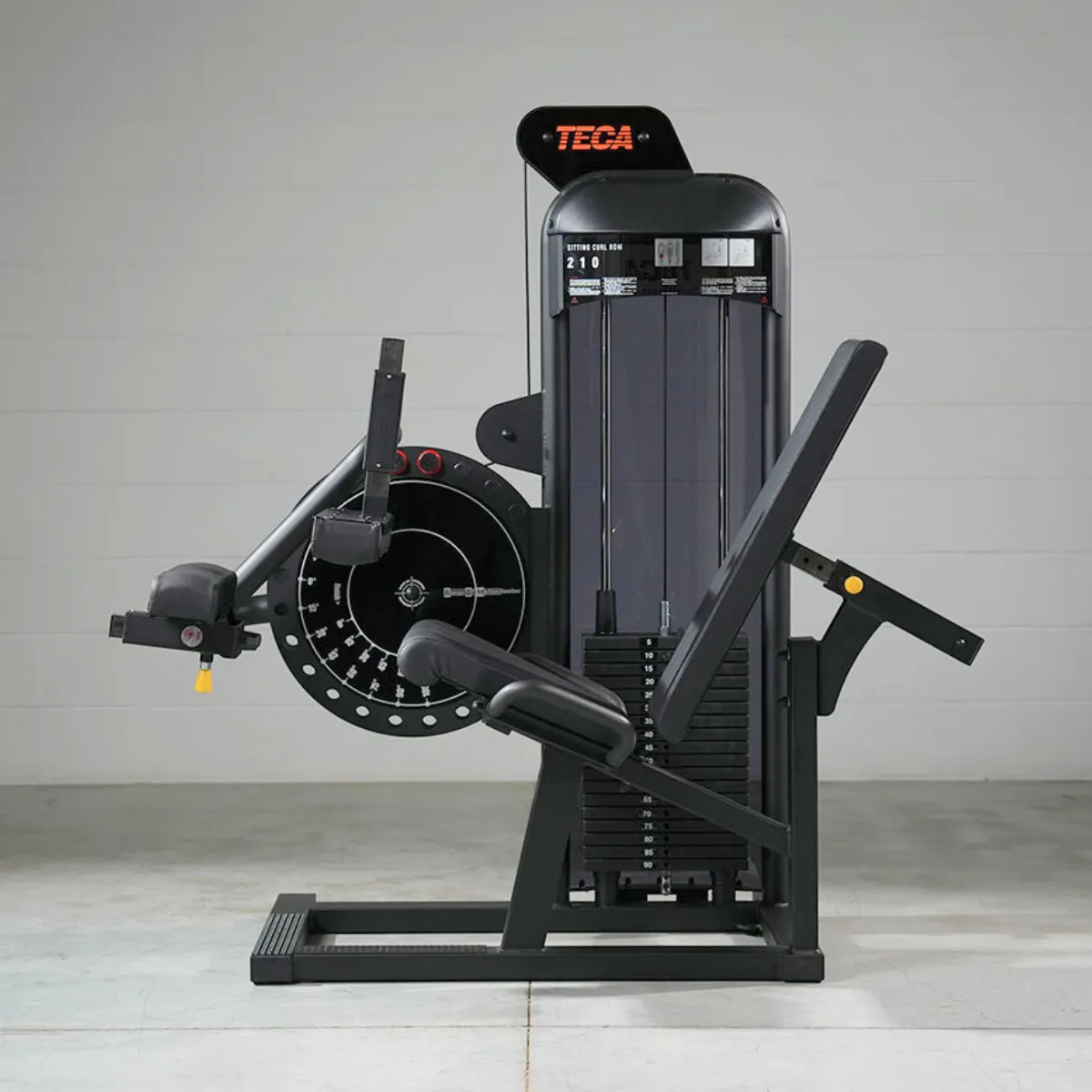
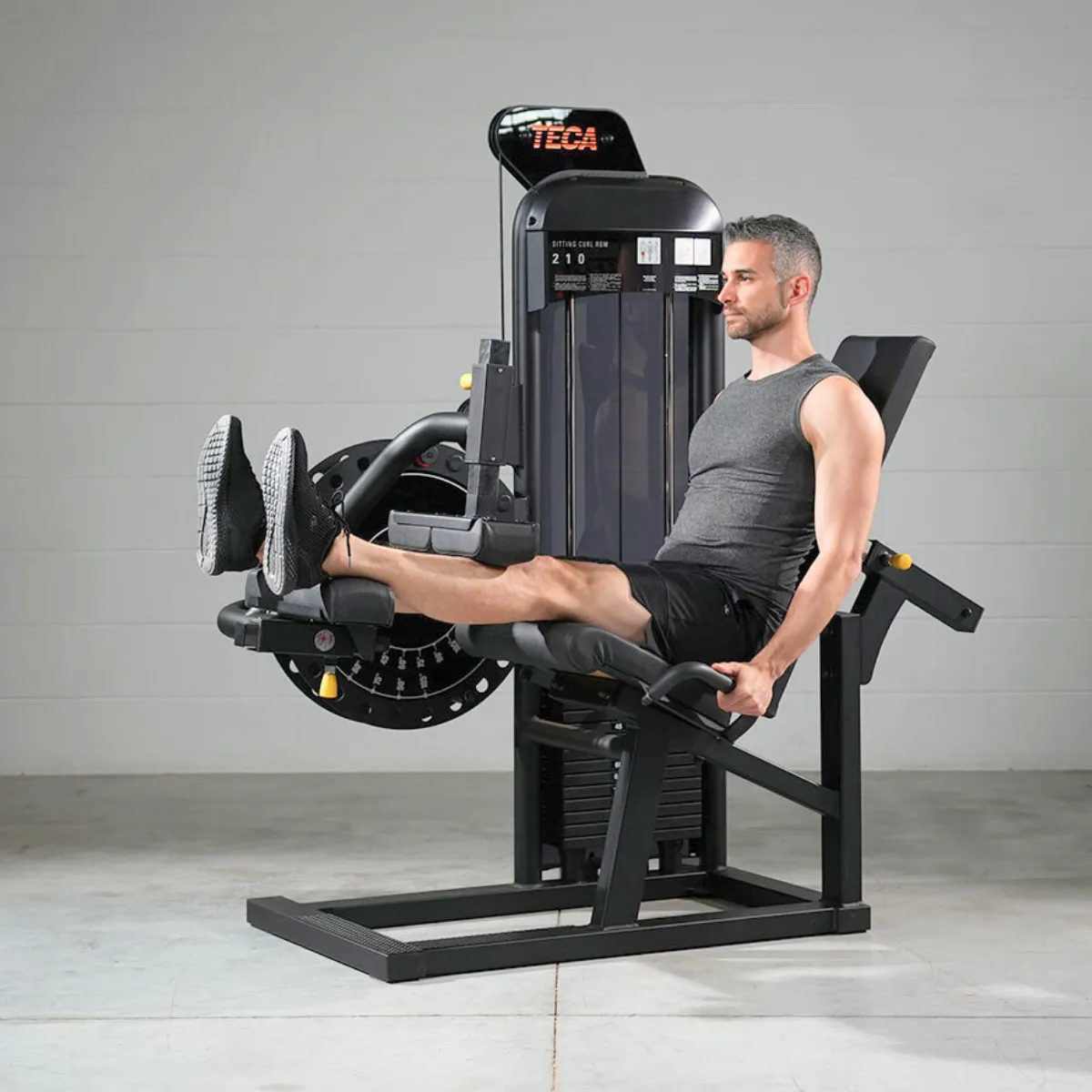
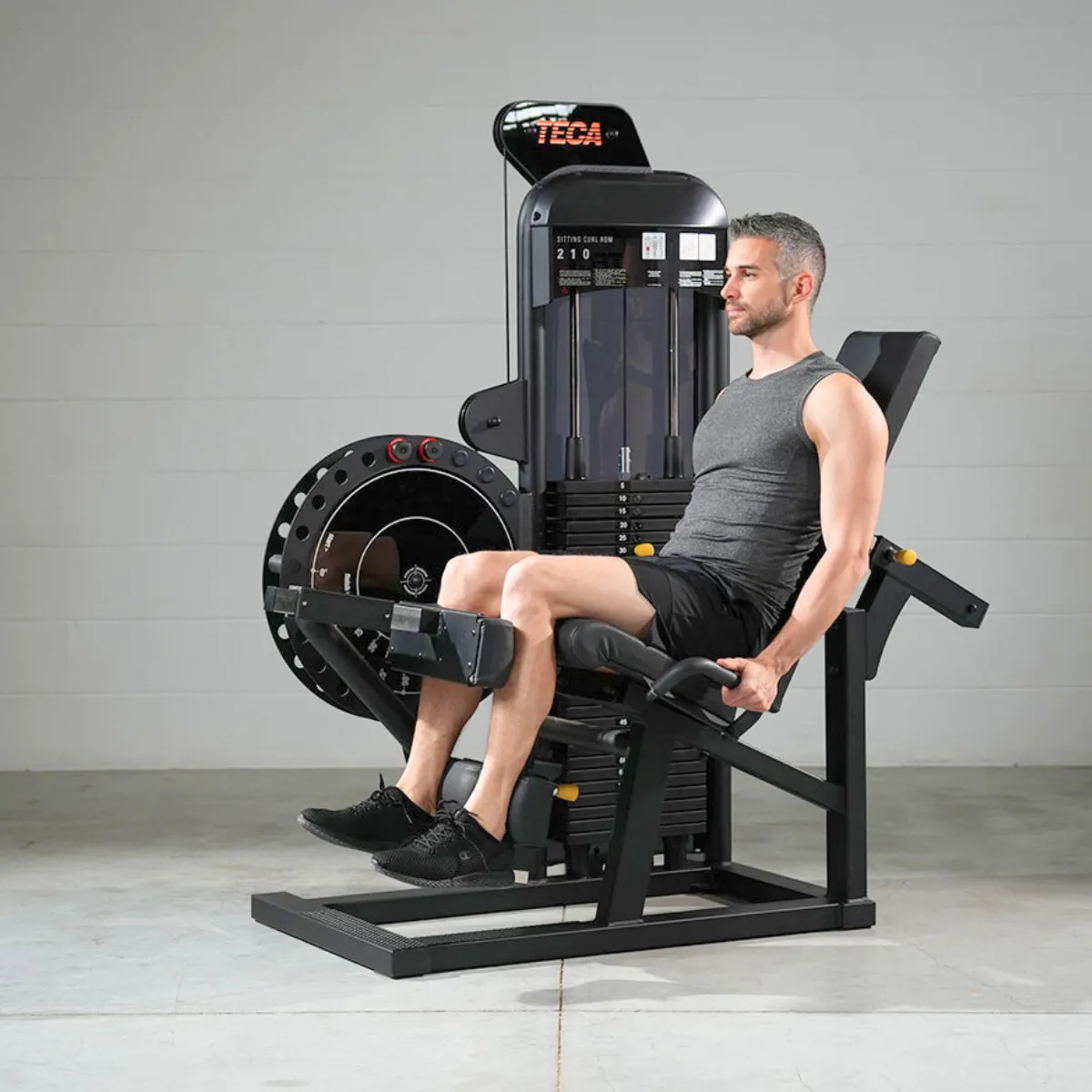
The Sitting Leg Curl is designed to overcome the structural limitations found in most seated leg curl machines in general-purpose gyms. A standard leg curl, no matter how common, almost always suffers from the same issues: a short lever, an unstable pelvis, a pivot that doesn’t respect joint anatomy, a range of motion that is hard to control, and a movement pattern that most users execute poorly, with clear lumbar compensations.
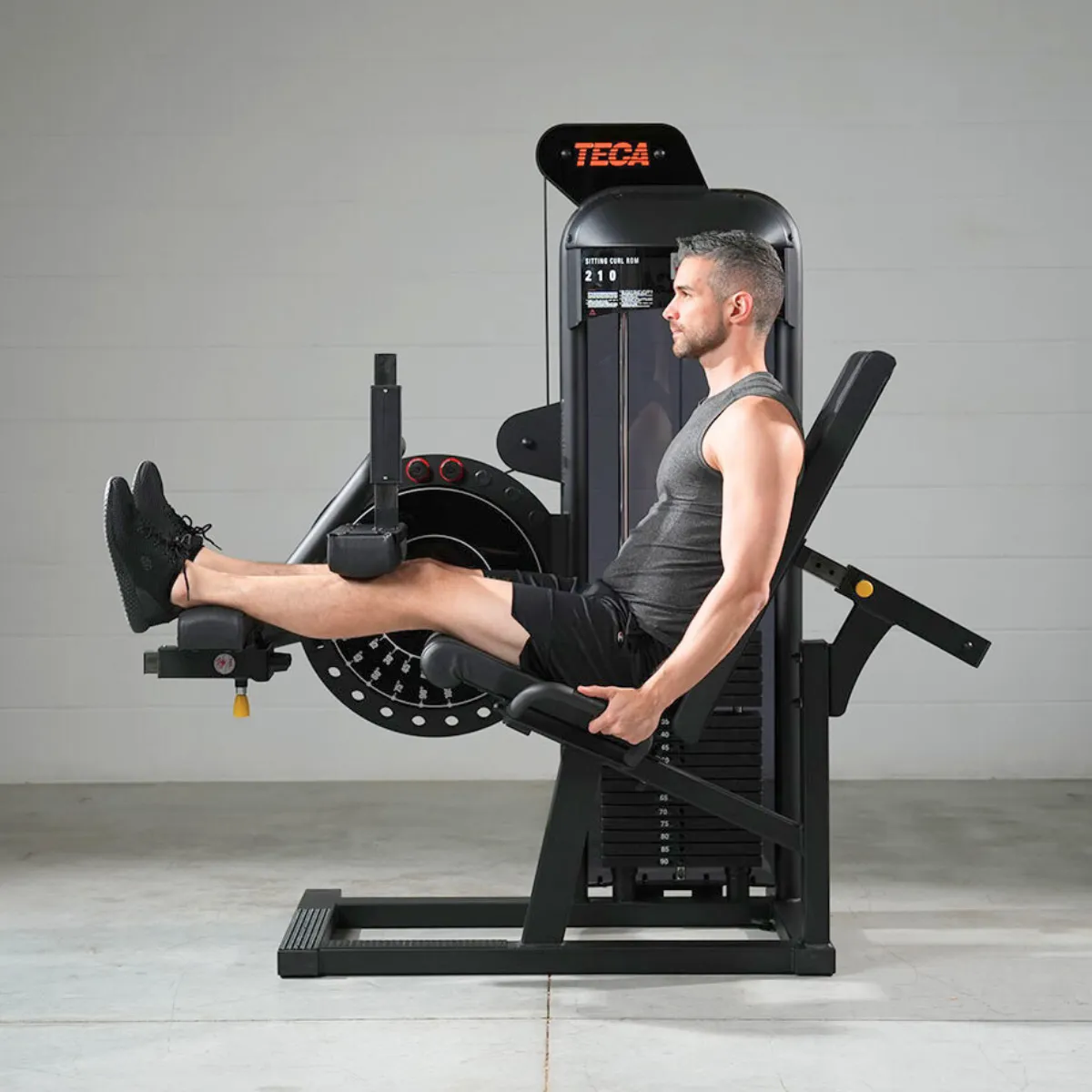
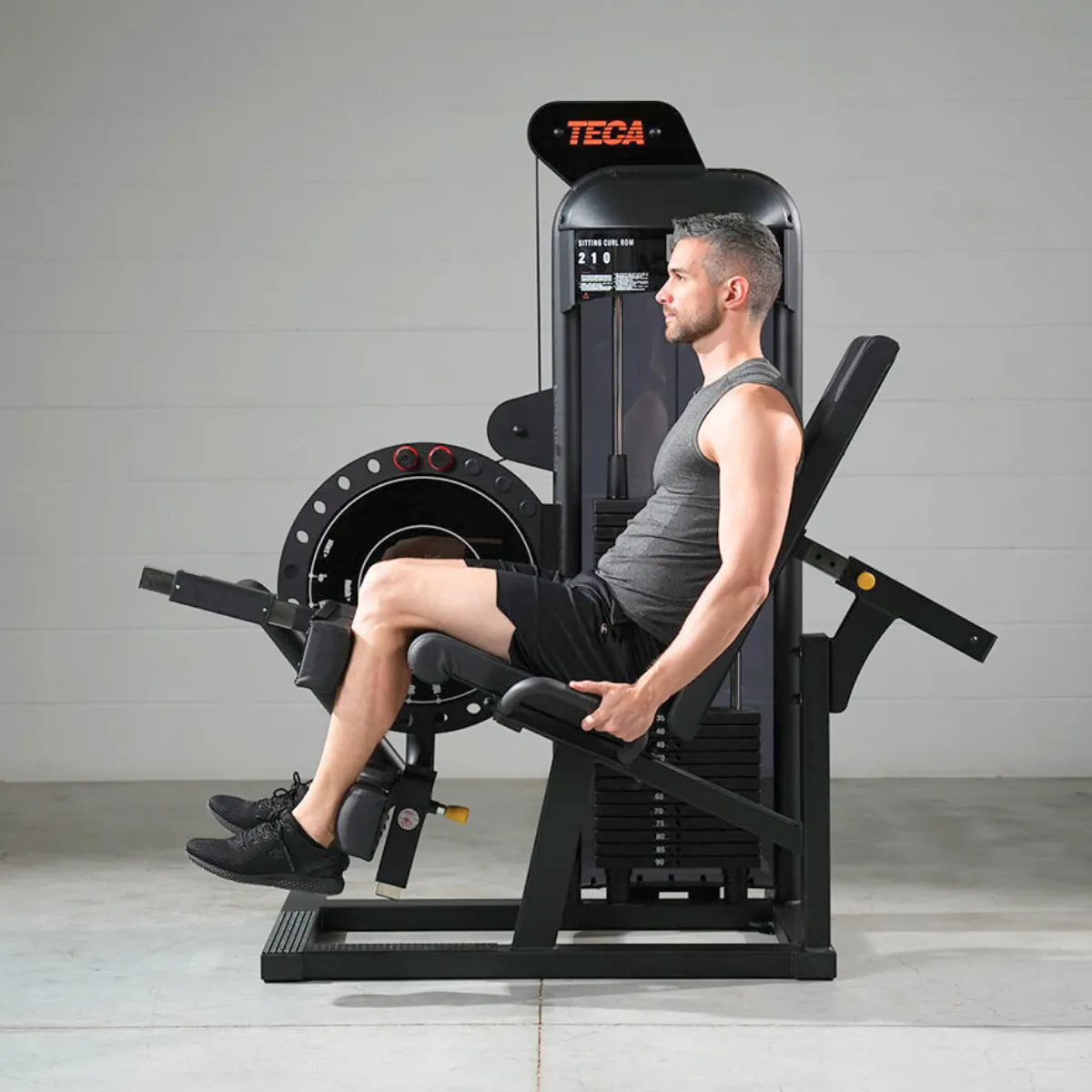
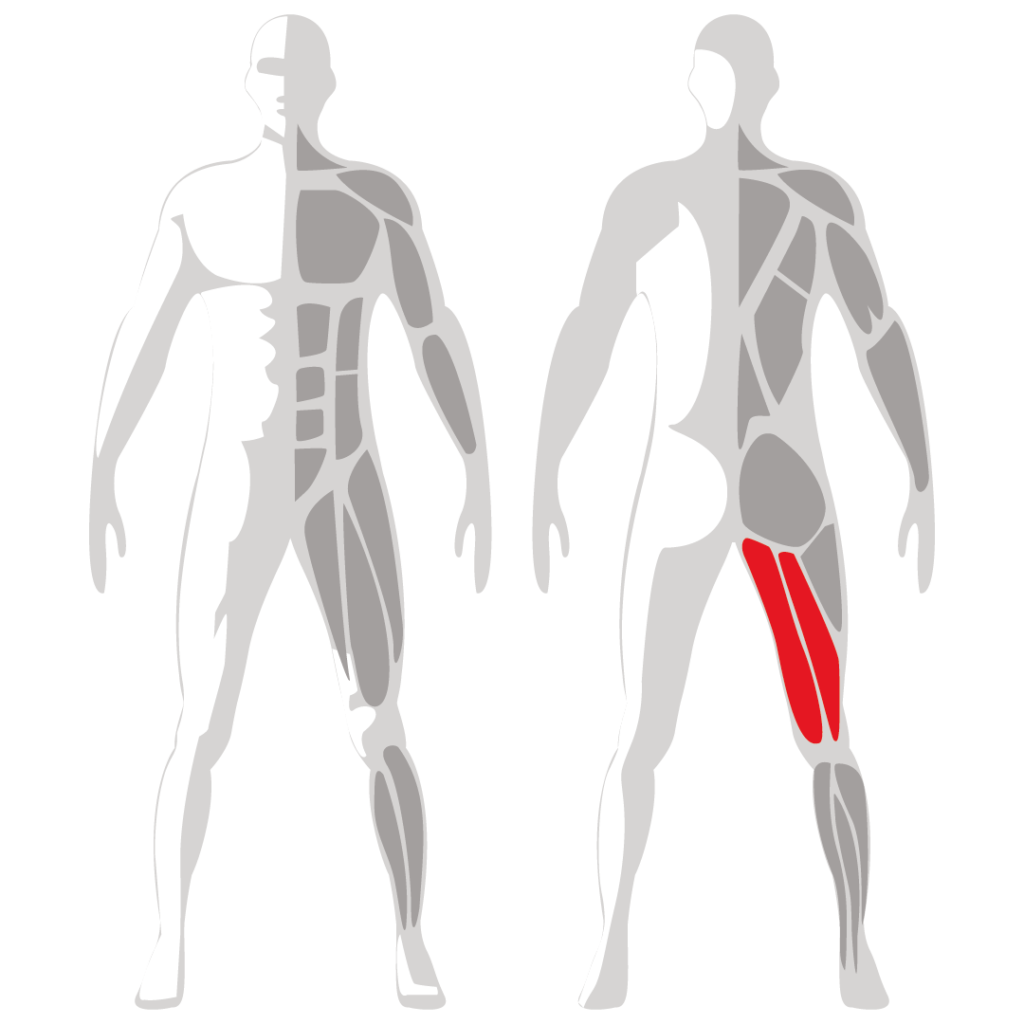
The Sitting Leg Curl works in a completely different way. The hip angle is kept stable at around 90 degrees, the pelvis never slides thanks to the thigh-locking system, and the movement curve truly follows the physiological profile of the hamstring muscles. Users immediately feel the difference: the load goes exactly where it should, without lumbar discomfort and without the frustration of “not feeling the hamstrings work.”
For the club, this translates into a real competitive advantage. A machine that allows users to immediately feel the correct muscle engagement is a machine they remember, appreciate and choose to use consistently. The Sitting Leg Curl communicates technical quality, attention to detail and a higher standard in equipment selection. It is not a generic leg curl: it is a sales argument during the tour, a tangible proof that the club invests in high-level biomechanics. In a market saturated with standard machines, this difference becomes identity and value.
One of the most underestimated variables in leg curls is the hip angle. Most commercial machines do not allow any meaningful modulation of this parameter: the user sits down and is forced into a single fixed setup, usually with a pelvis free to move and a spine that must compensate. The result is a “dirty” movement, only partially repeatable and often perceived as uncomfortable.
The Sitting Leg Curl starts from the opposite philosophy: stabilizing the hip angle is the foundation for true hamstring isolation. The alignment of the pivot with the knee, the seat that prevents sliding, the long lever arm and the adjustable tibial pad are not aesthetic choices; they are pure biomechanics. They ensure that tension stays on the hamstrings from start to finish, without shifting onto the gastrocnemius, without lumbar compensations and without pelvic rotation.
When a club offers this kind of experience, it is offering professionalism. The user understands that the movement is intuitive, stable and meaningful. Trainers no longer need to constantly intervene to correct technique. Execution becomes safer and more repeatable. And an exercise that can be explained in ten seconds and performed correctly on the first attempt is a huge operational saving for the club. A machine with scientifically designed angles becomes a tool that frees up trainer time and elevates the premium perception of the strength area.
Many leg curls only allow the starting position to be adjusted — and sometimes not even that. This is a major limitation, because the hamstring behaves very differently depending on its stretch level and passive tension. A fixed ROM forces all users into the same movement, regardless of mobility, strength, knee sensitivity or left–right differences.
The Sitting Leg Curl introduces a modern concept: independently controlling the opening angle (start of the movement), the closing angle (end of the movement), or both to create a central active range. This makes it possible to train the hamstring in a lengthened position without lumbar stress, limit the closing phase to protect sensitive users, or create a highly controlled teaching range for beginners, postpartum women, older adults or clients in reconditioning phases.
For the club, this versatility is a multiplier of value. With a single machine it becomes possible to structure very different programs: hamstring & glutes for aesthetics, injury-prevention protocols for runners, technical work for PT studios, post-injury rehabilitation pathways, targeted sessions for rigid or insecure users. Each ROM variation becomes an additional service the club can sell, another reason for clients to stay and a concrete demonstration of personalized training.
Today, glute-focused and posterior-chain programs are the commercial core of female fitness and advanced aesthetic protocols. Yet many gyms focus only on hip thrusts, deadlifts and glute machines, forgetting that the hamstring plays a crucial role in leg shape, pelvic stability and the visual outcome of the glutes from the back.
The Sitting leg Curl gives the hamstrings the central role they deserve. The stable seat eliminates cheating, the long lever creates immediate deep contraction, and the adjustable ROM makes it possible to choose between lengthened-range work, aesthetic central ranges or controlled closing ranges. This makes the Sitting leg Curl a key element in any high-level glute & posterior-chain corner.
A client who enters a club and sees a hip thrust, a glute machine and a Sitting Leg Curl engineered with this precision understands immediately that the gym follows a methodology.
Used correctly, the Sitting leg Curl accelerates visible results in tone, definition and posterior-thigh shaping. And when clients see real changes in their body, they renew, they buy add-on programs, they speak positively about the club and they bring other people. Less marketing, more biomechanics: that is what creates real loyalty.
Boutique gyms don’t sell “equipment”; they sell identity. When someone walks in, looks at the machines and immediately understands whether they are in an ordinary gym or in a carefully designed environment. In the premium segment, clients demand precision, safety, immediate muscle feel, attention to detail and the perception of personalization. A standard leg curl — even if visually appealing — does not convey any of this.
The Sitting Leg Curl does. From the very first repetition, the person feels that the movement is different: more controlled, deeper, more technical yet surprisingly easy to manage. The backrest stabilizes the pelvis, the hamstrings activate immediately without knee or back discomfort, and the smooth TECA resistance curve creates an unmistakable sense of quality that anyone can perceive, even with no training background.
For the entrepreneur, this is a major commercial advantage. The machine becomes part of the sales tour: it can be shown, tested and explained, highlighting how the ROM adapts to the user, how the seat eliminates compensations, and how the trajectory respects true biomechanics. When a prospective client understands that this is not a generic piece of equipment pulled from a catalog, but a deliberately chosen tool, they are more willing to invest, trust and stay.
In a competitive market, a machine like the Sitting Leg Curl becomes an identity marker. It defines the technical standard of the entire club.