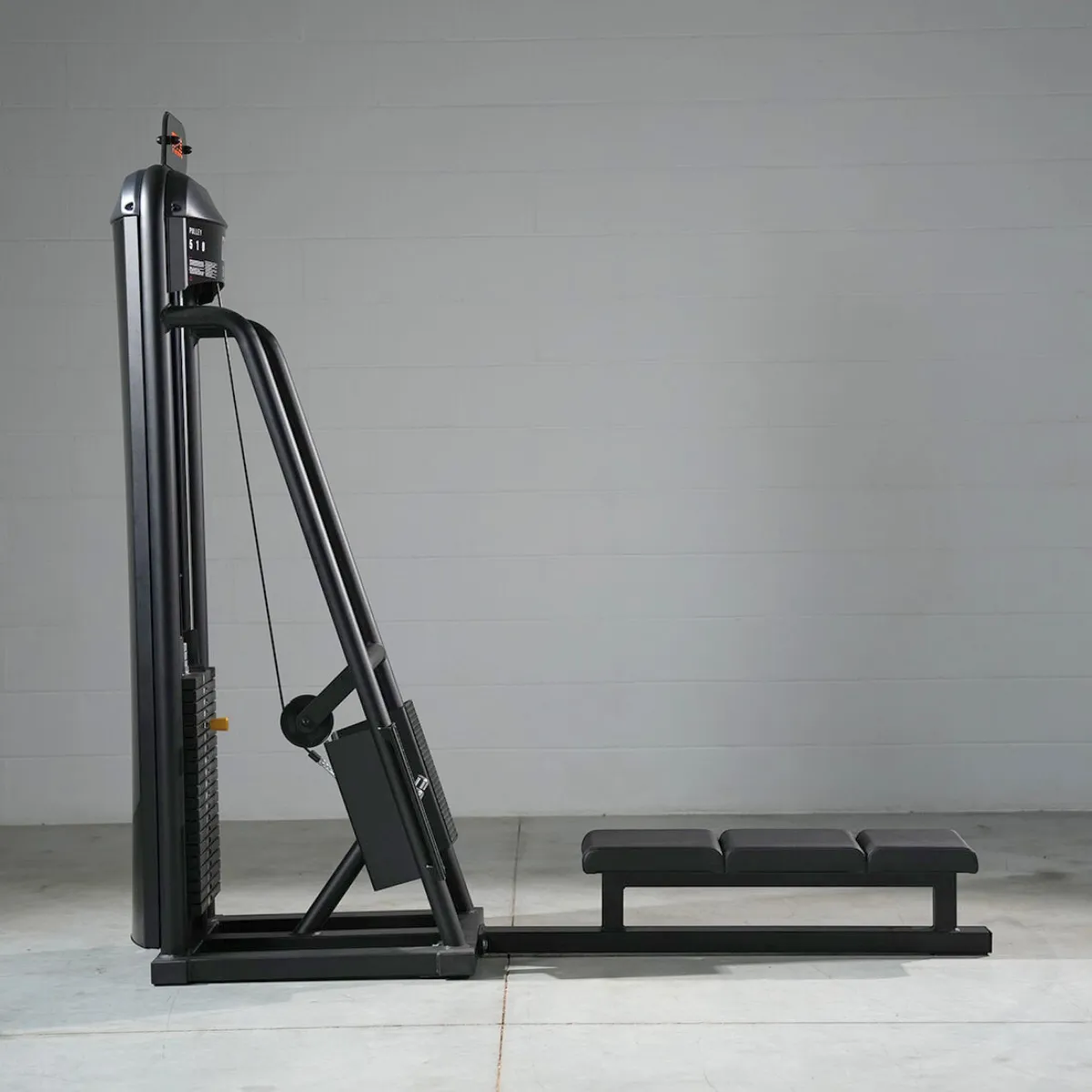
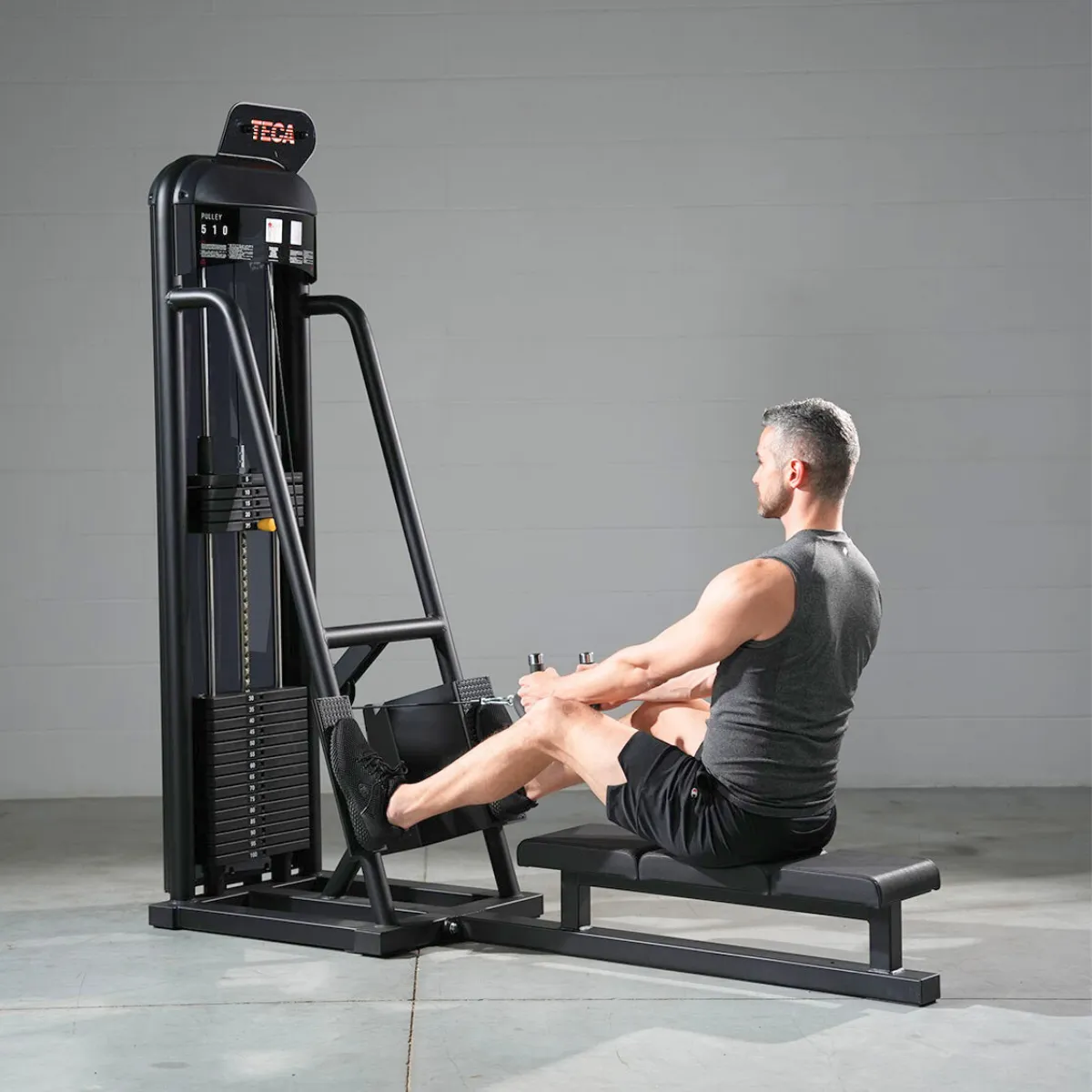
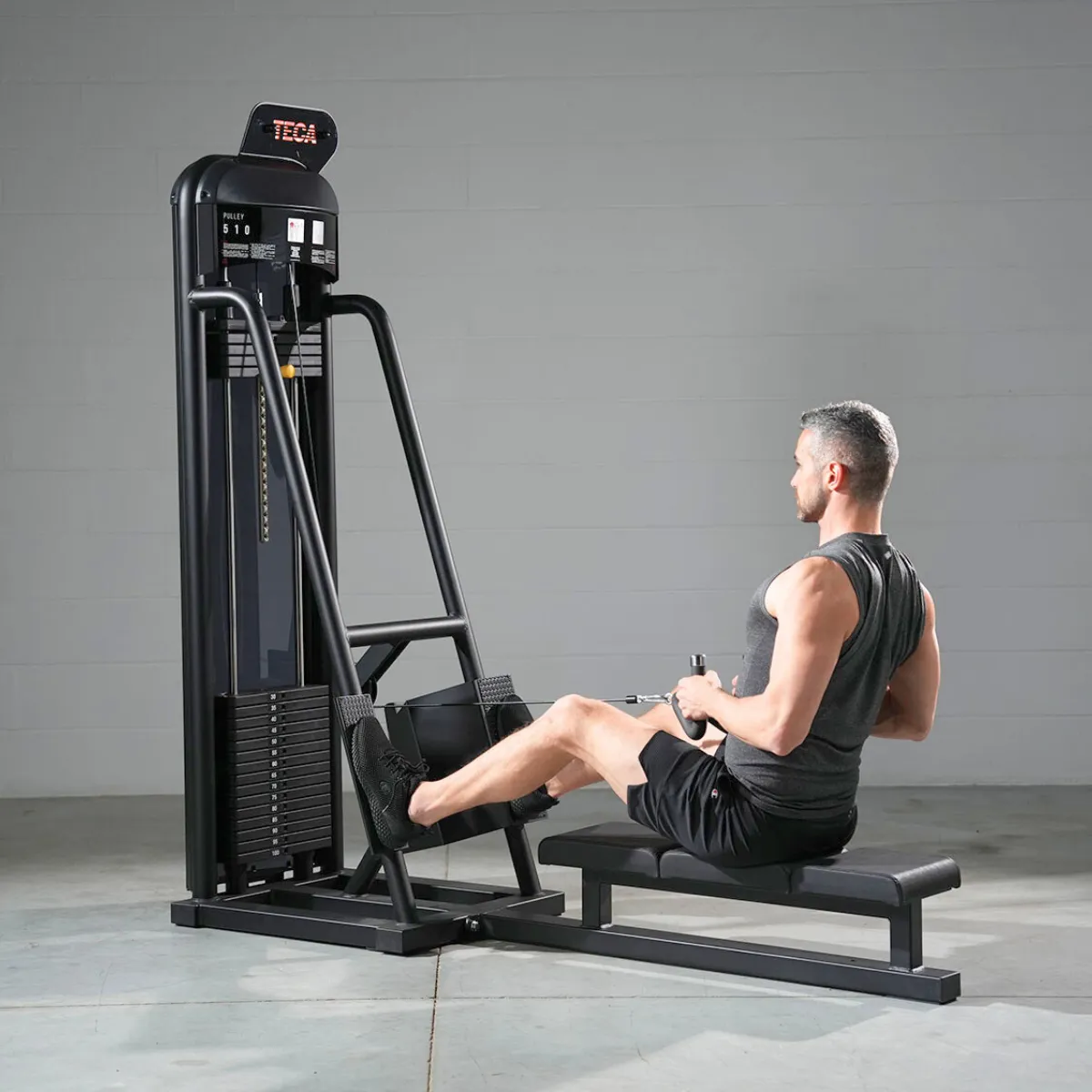
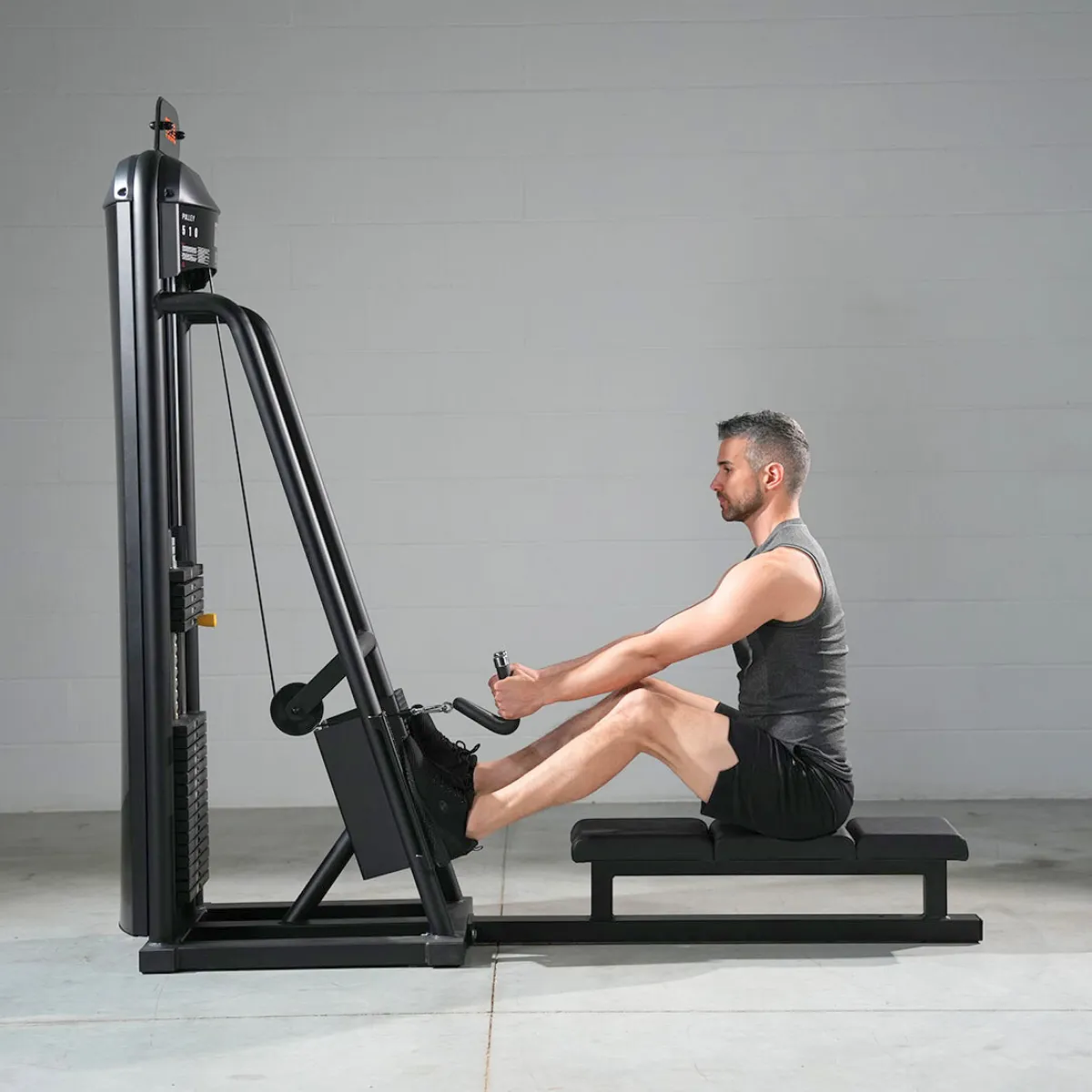
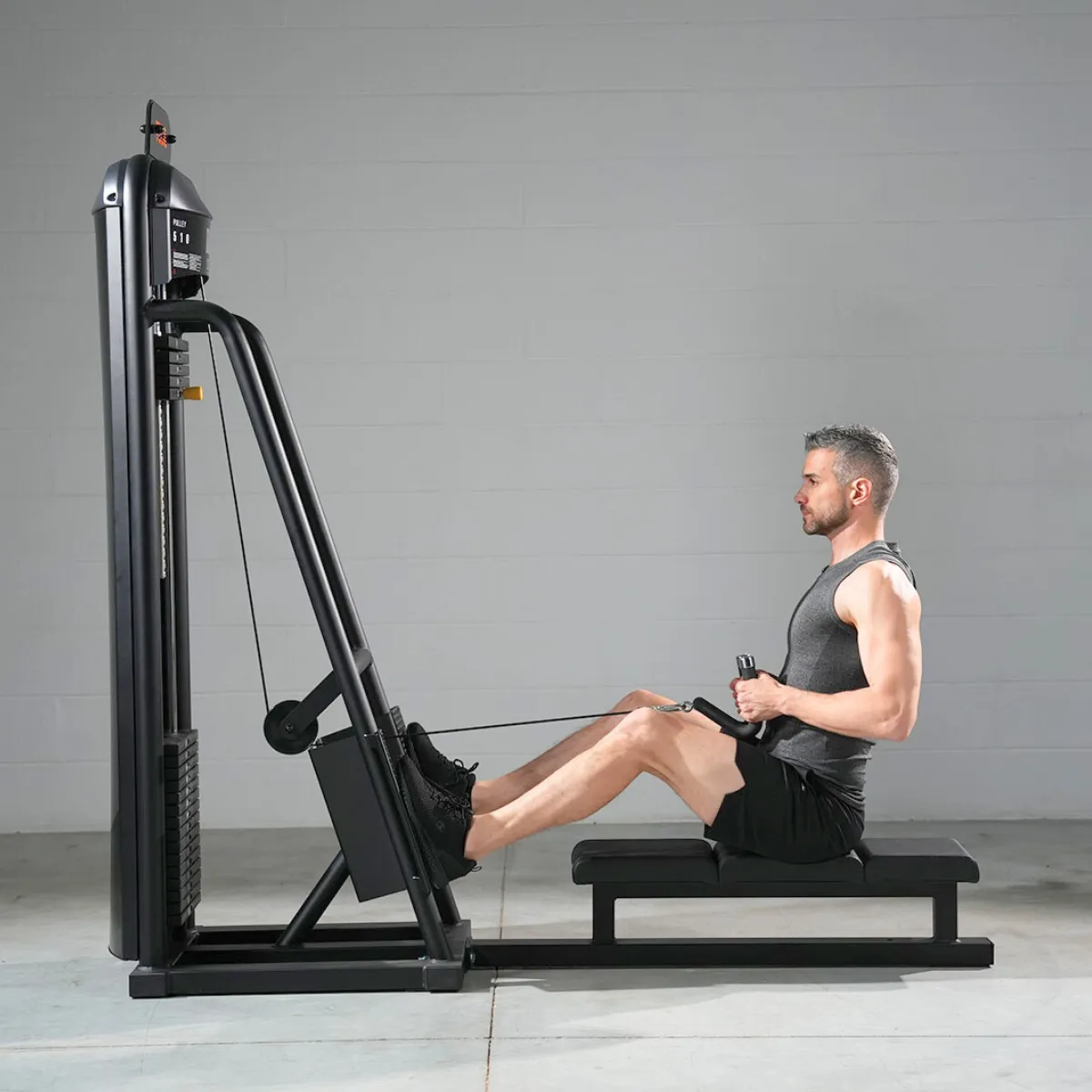
Most pulley machines found in gyms are built on very basic mechanics, often derived from extremely old designs. Users pull the handle and immediately feel friction, inconsistent resistance, and a movement that doesn’t truly follow the natural biomechanics of the back. Over time, they associate the pulley with a mediocre sensation.
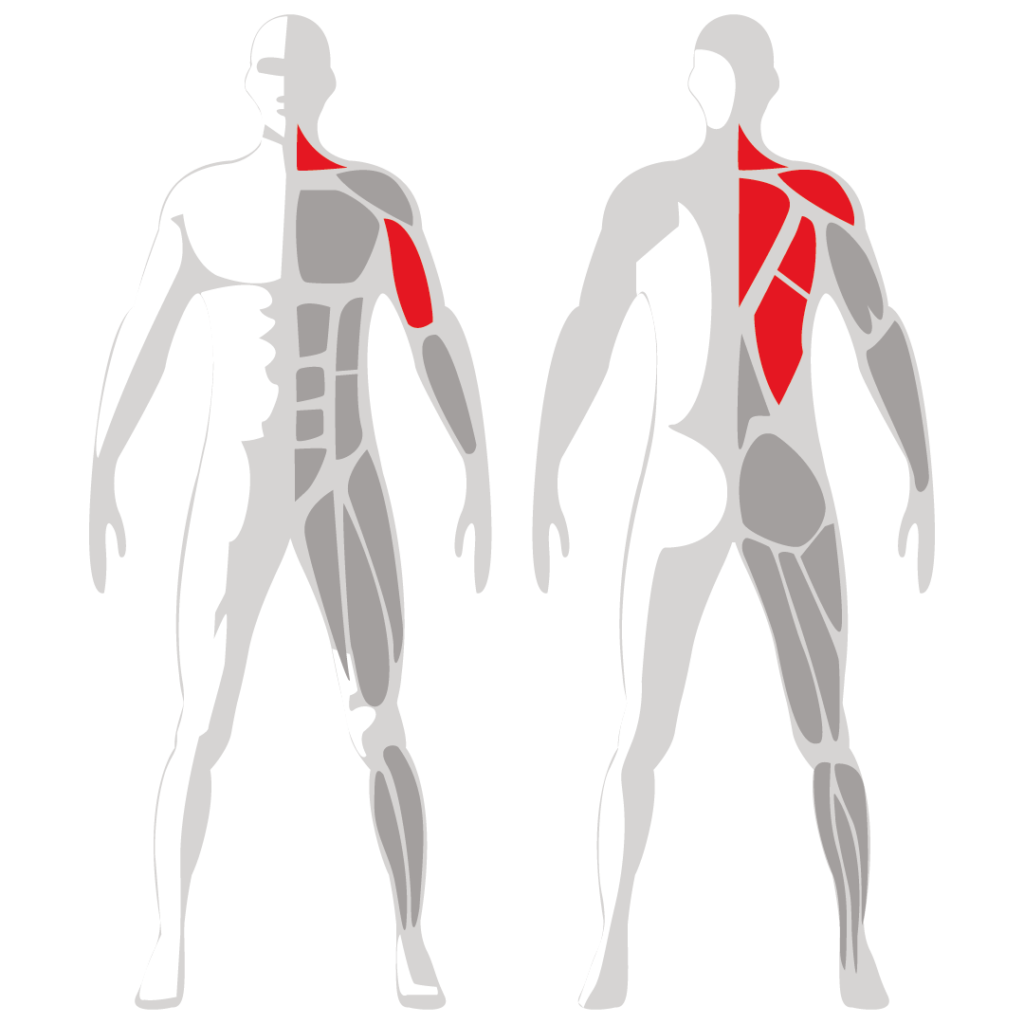
The Pulley was created to overturn this experience. The TECA resistance curve eliminates sticking points, distributes tension evenly, and delivers a smoothness that many machines — including those from well-known brands — simply can’t match. The trajectory has been engineered to respect the natural line of pull of the latissimus dorsi and the posterior-chain musculature, avoiding the cervical and lumbar compensations so common in cheaper pulleys.
The result is a more natural movement, a clearer muscular sensation, and a dramatically higher perceived quality. For the club, this means standing out with a machine everyone recognises, yet no one has ever felt this way before. A difference that is instantly perceived on the very first repetition — and a powerful competitive advantage when a prospective member compares the feel of your equipment with what they’ve experienced elsewhere.
In a pulley exercise, more than in any other horizontal row, the quality of the resistance curve determines the quality of the entire movement. With an irregular curve, the user loses control, jerks the handle, overloads the trapezius and lower back, and ends up feeling like the exercise is “hard but not useful.”
The Pulley eliminates this issue with its progressive resistance and a guided — yet not rigid — trajectory that naturally steers the elbow toward the correct line of adduction.
When a machine automatically puts the user in the right position to perform the movement correctly, two things happen. The user finally experiences a clear, pleasant sensation: they feel their lats working, they feel stable, they feel in control. For the trainer, it becomes a massive operational advantage: fewer corrections, fewer repositionings, fewer repeated errors. A machine that allows beginners, women 40+, hesitant users, and athletes to perform correctly from the first attempt is a machine that elevates the perceived quality of the club and directly supports retention.
Standard pulley machines force the user to “search” for the correct pulling line. Inexperienced users shrug their shoulders, tilt their pelvis, pull mainly with their arms, and fatigue the wrong muscles. It is one of the exercises trainers have to correct most frequently, especially with new members.
The Pulley, thanks to its refined kinematics, automatically reduces these issues. The stable seat, the support that keeps the pelvis fixed, and the trajectory that naturally guides the elbow minimise overactivation of the upper traps and limit the classic technical mistakes. The user stays stable, maintains alignment, avoids compensating with the lower back, and doesn’t lose balance during the pull. The exercise becomes intuitive and, above all, repeatable.
For the club, this translates into fewer micro-corrections, fewer requests for help, less wasted trainer time, fewer complaints about cervical or lumbar discomfort, and a much cleaner, more professional user experience.
The pulley is one of the most important exercises in postural programmes, “women 40+” strategies, and reconditioning paths. It teaches scapular control, improves shoulder-girdle stability, strengthens the rhomboids, and helps users develop a stable, open thoracic posture. These benefits, however, only emerge if the machine truly allows the exercise to be performed correctly.
With the Pulley, this happens naturally. The smooth resistance curve creates an eccentric phase that teaches instead of destabilising. The natural trajectory guides the user into a precise scapular pattern. Even those who have never trained their back before can immediately feel where they should be working.
For a personal trainer, having a machine that “teaches by itself” is invaluable: it can be integrated into posture programmes, glute-focused aesthetics (because back strength influences glute aesthetics), women 40+ programmes, corporate wellness, and protocols for reducing cervical pain.
The Pulley becomes a teaching tool, not just another piece of equipment.
The return on investment of a machine does not depend on its purchase price, but on its actual usage. In many gyms, traditional pulley machines are used far less than expected because they provide a poor experience: irregular resistance, non-natural trajectories, weak muscular sensations, and constant compensations. These machines end up being present, but not productive — and they do nothing to improve retention or support premium programme sales.
The Pulley overturns this dynamic by generating spontaneous usage, higher frequency of use, and immediate user satisfaction — the three variables that determine the real ROI of any piece of equipment.
The TECA resistance curve makes the movement enjoyable from the first repetition, increasing the likelihood that users include the pulley regularly in their routine. A machine that delivers an immediate muscular sensation creates a positive loop: users try it, feel it working, interpret it as effective, and come back to it. This increases membership longevity, encourages users to follow structured programmes, and elevates the value of trainers who can integrate the SP510 into their protocols without constant corrections.
Another key factor in ROI is operational efficiency. Standard pulleys require frequent intervention from trainers, stealing time from PT opportunities. The Pulley, thanks to its natural biomechanical guidance, drastically reduces corrective workload and frees staff resources for high-value activities such as consultations, personal training, small-group programmes, and onboarding sessions. A machine that “teaches by itself” reduces staff cost and increases staff availability.
The result is a higher level of utilisation, lower operational overhead, greater retention, and a stronger perception of quality — all without increasing labour costs. The Pulley is not just a pulley that feels better; it is an economic multiplier that improves every financial metric that matters in a modern fitness business.