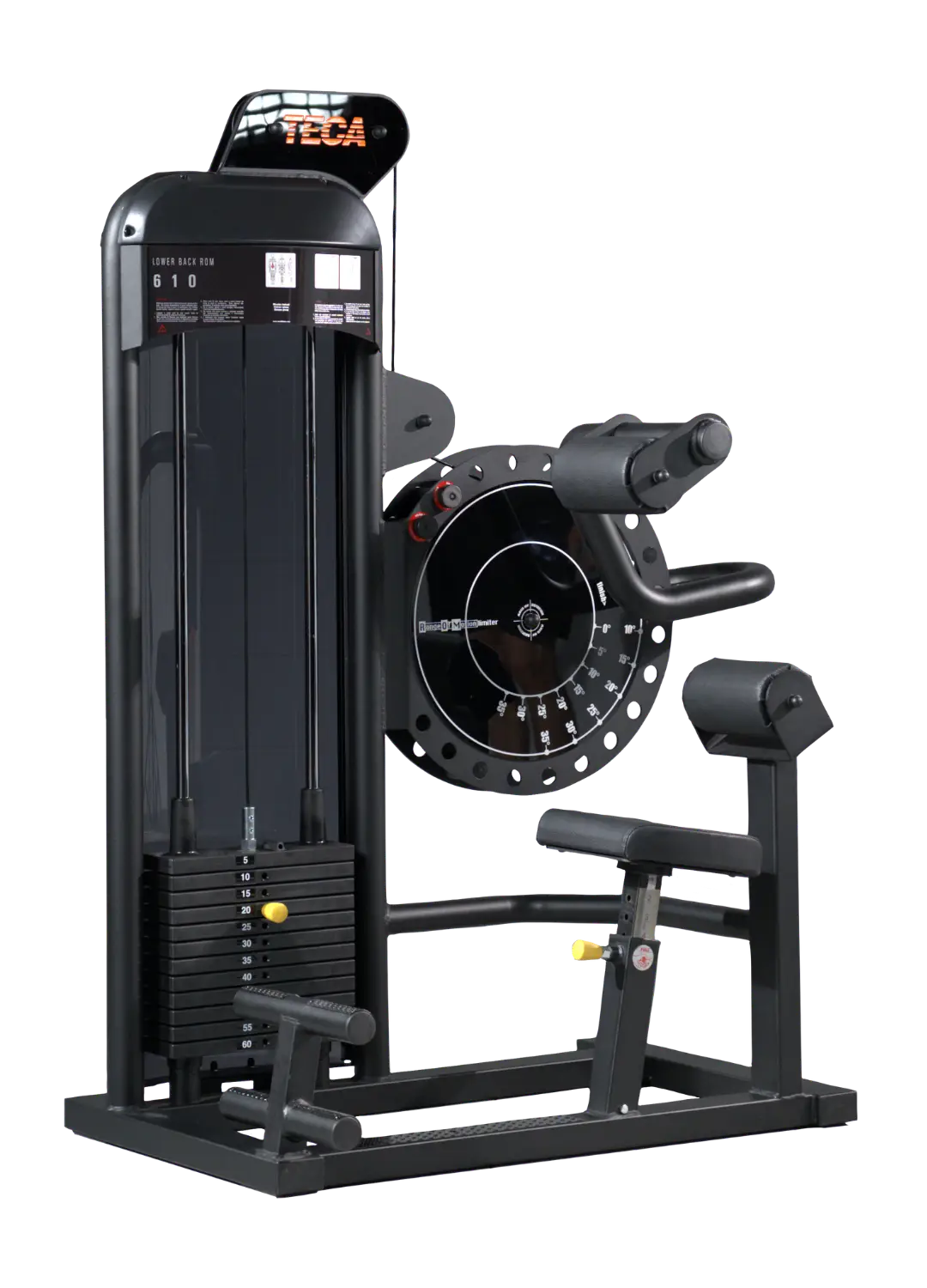
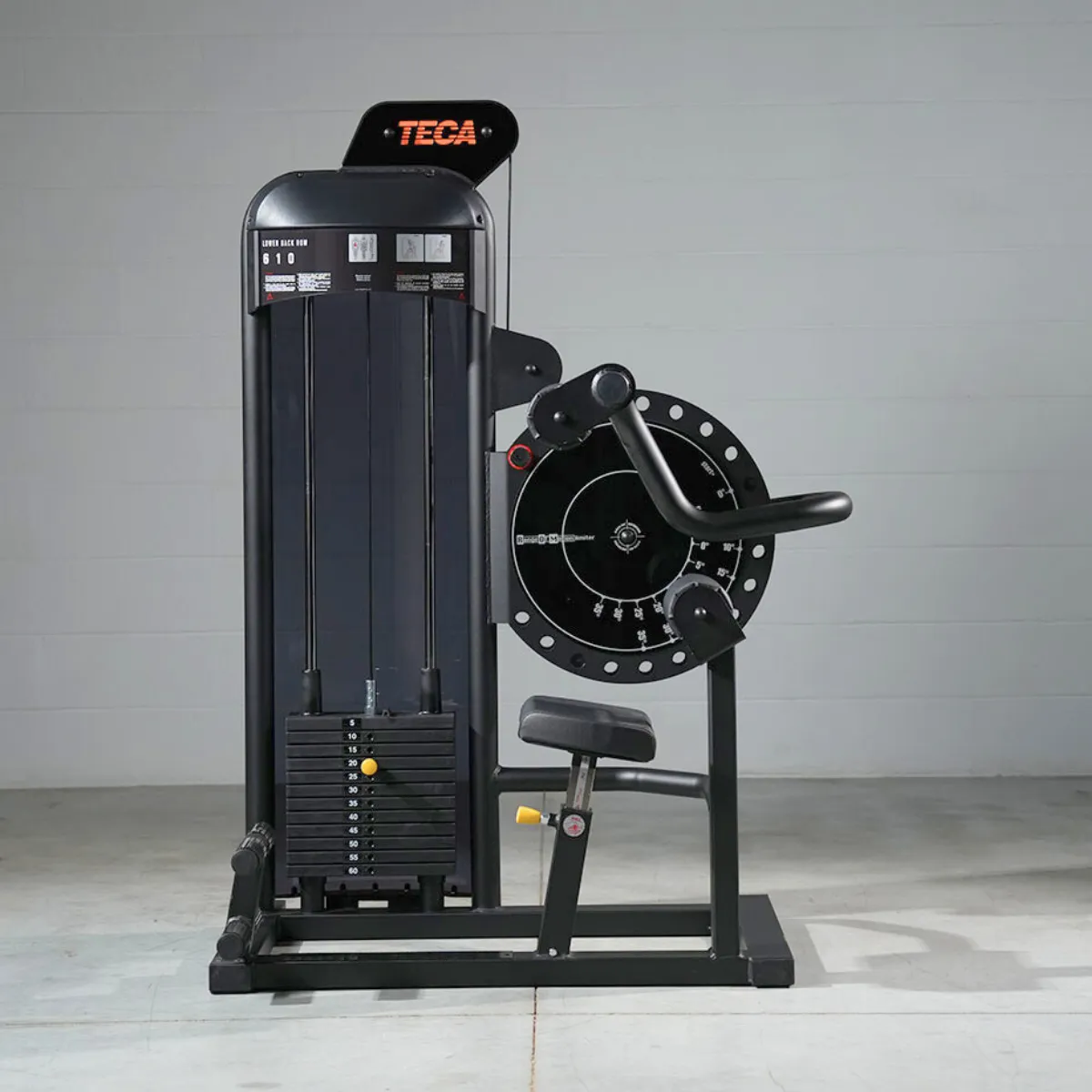
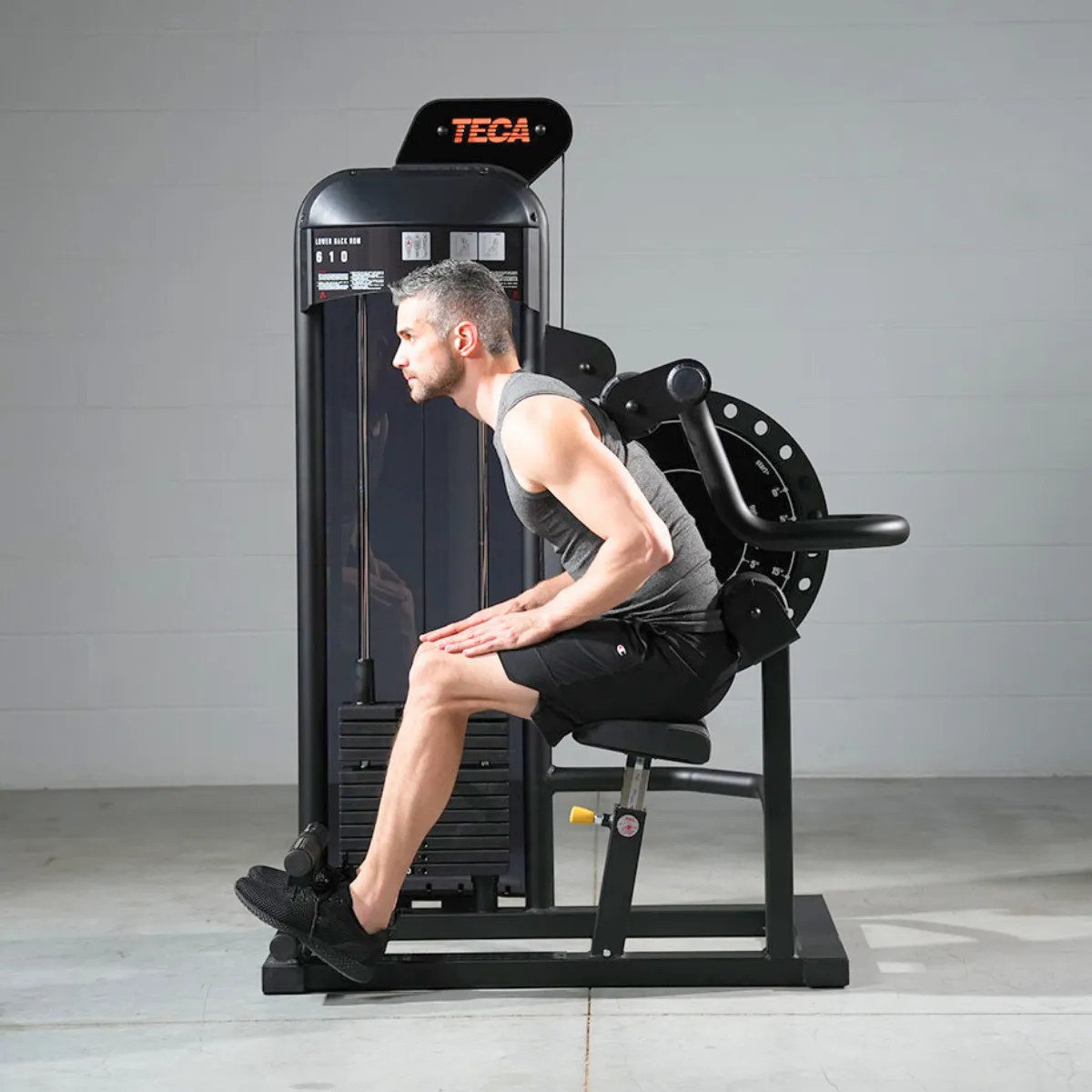
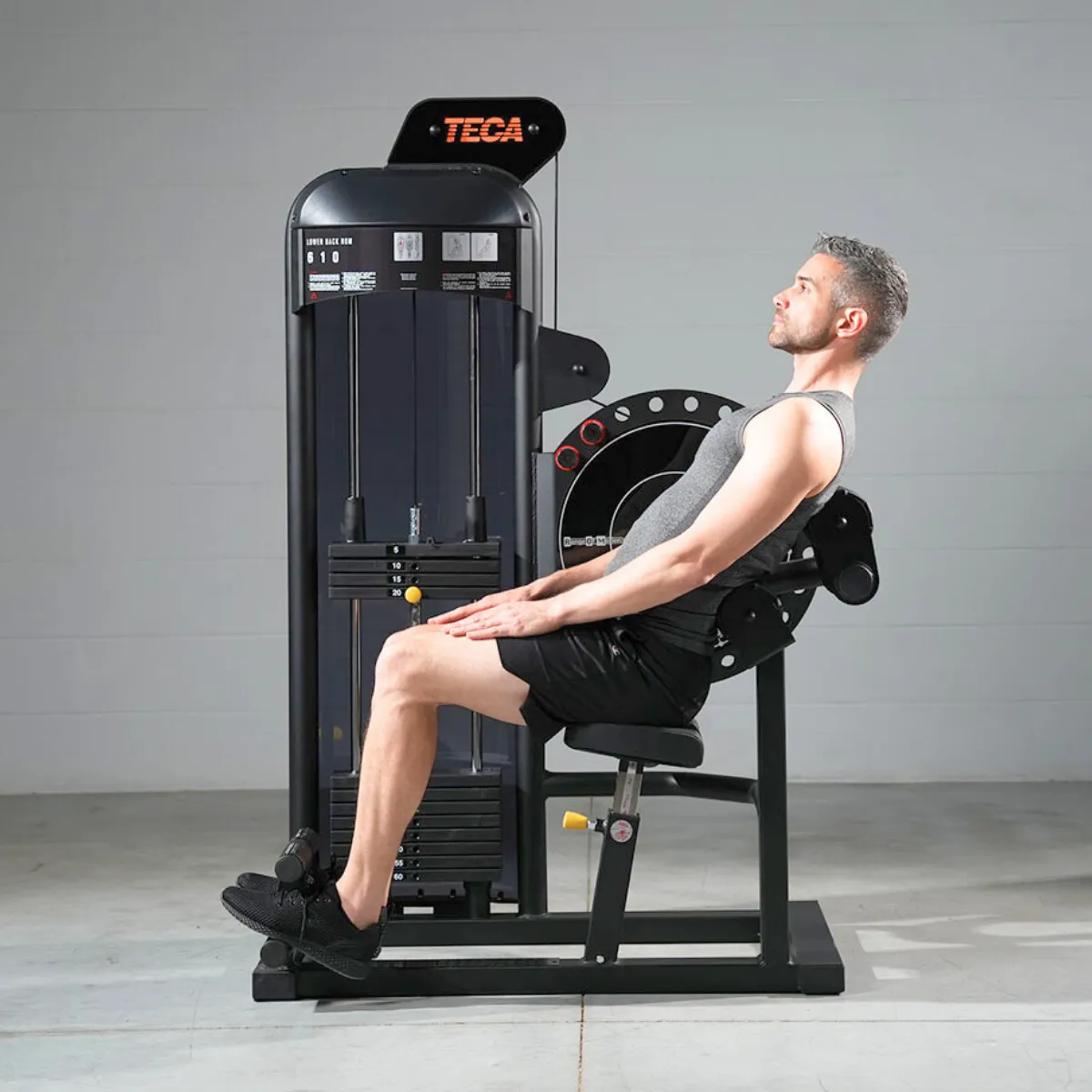
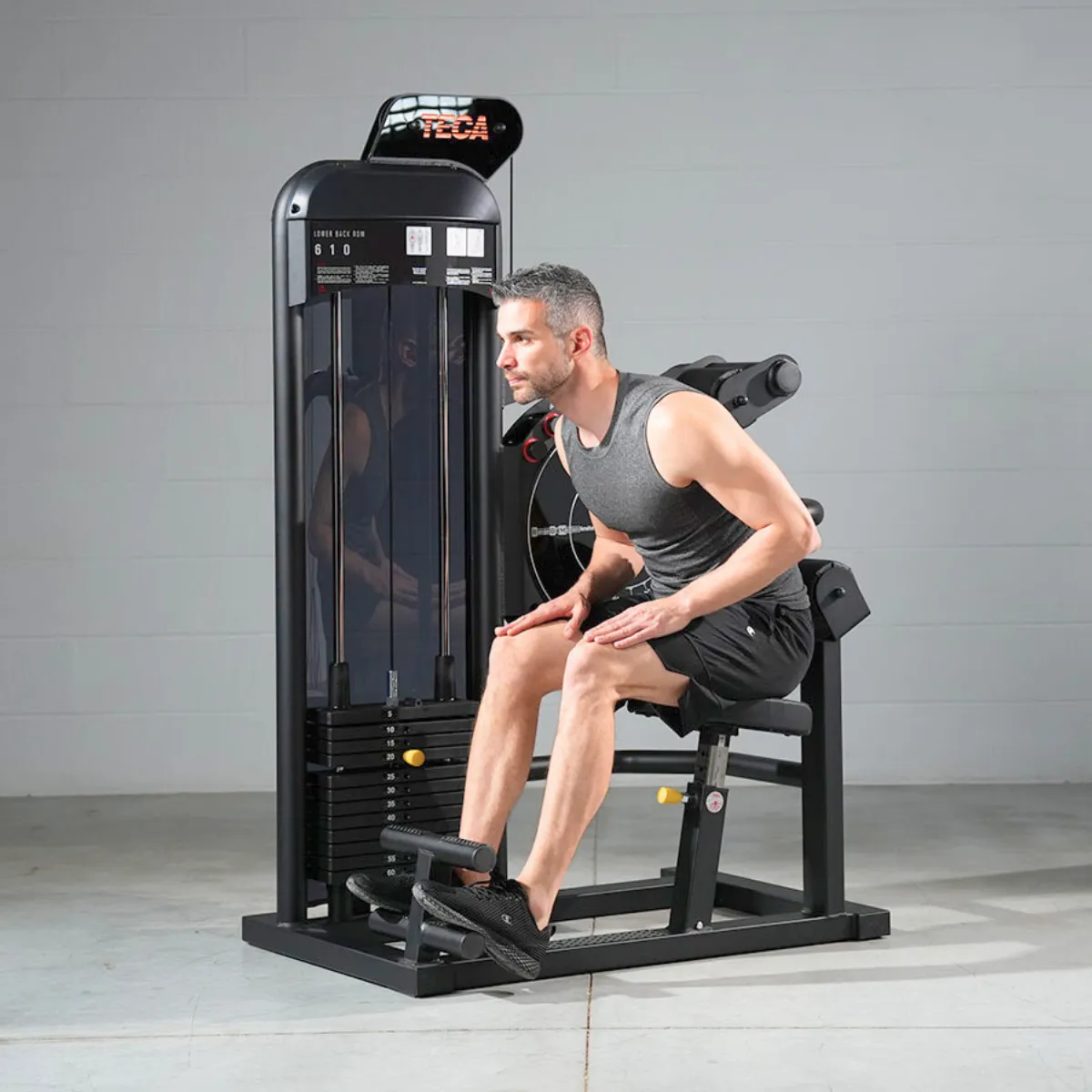
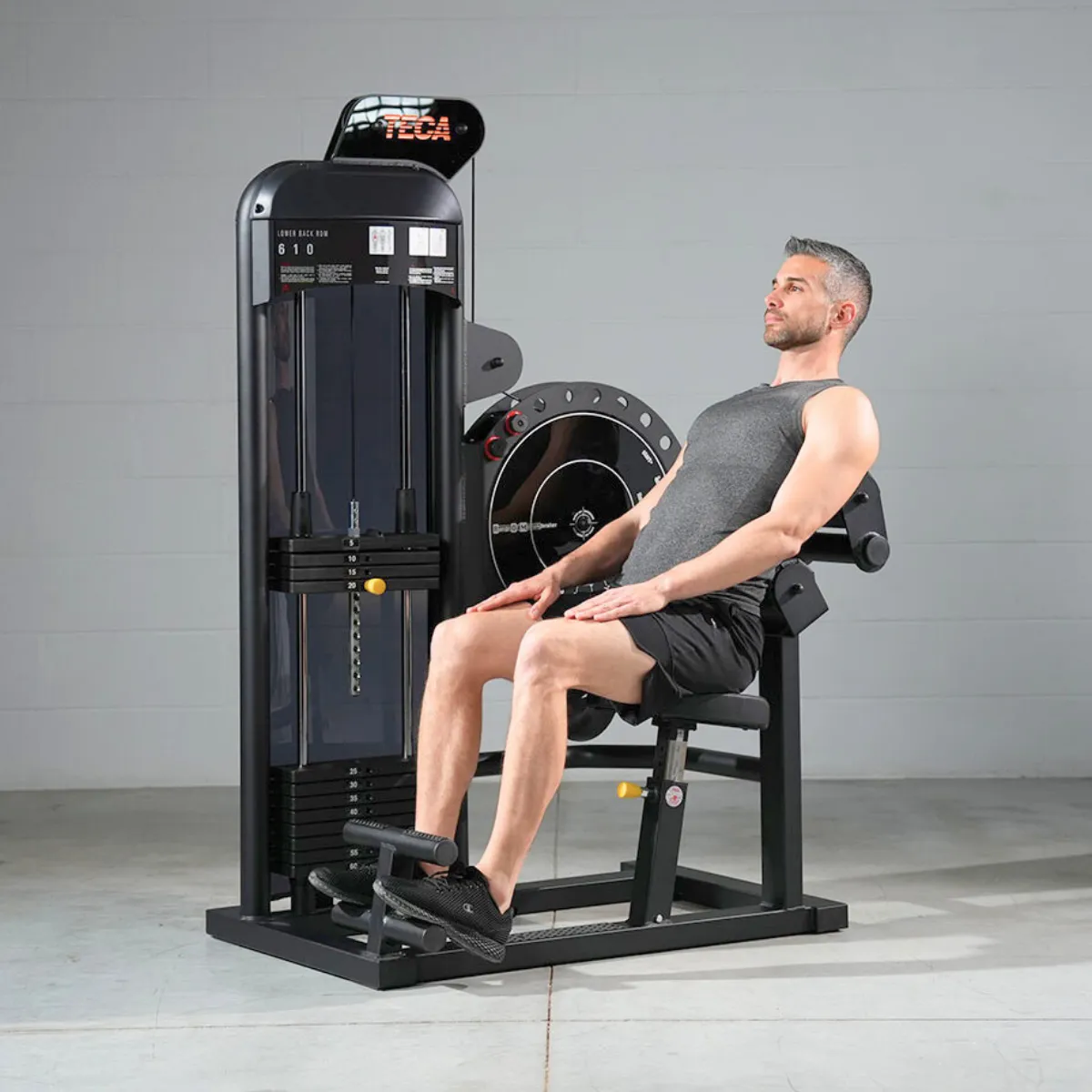
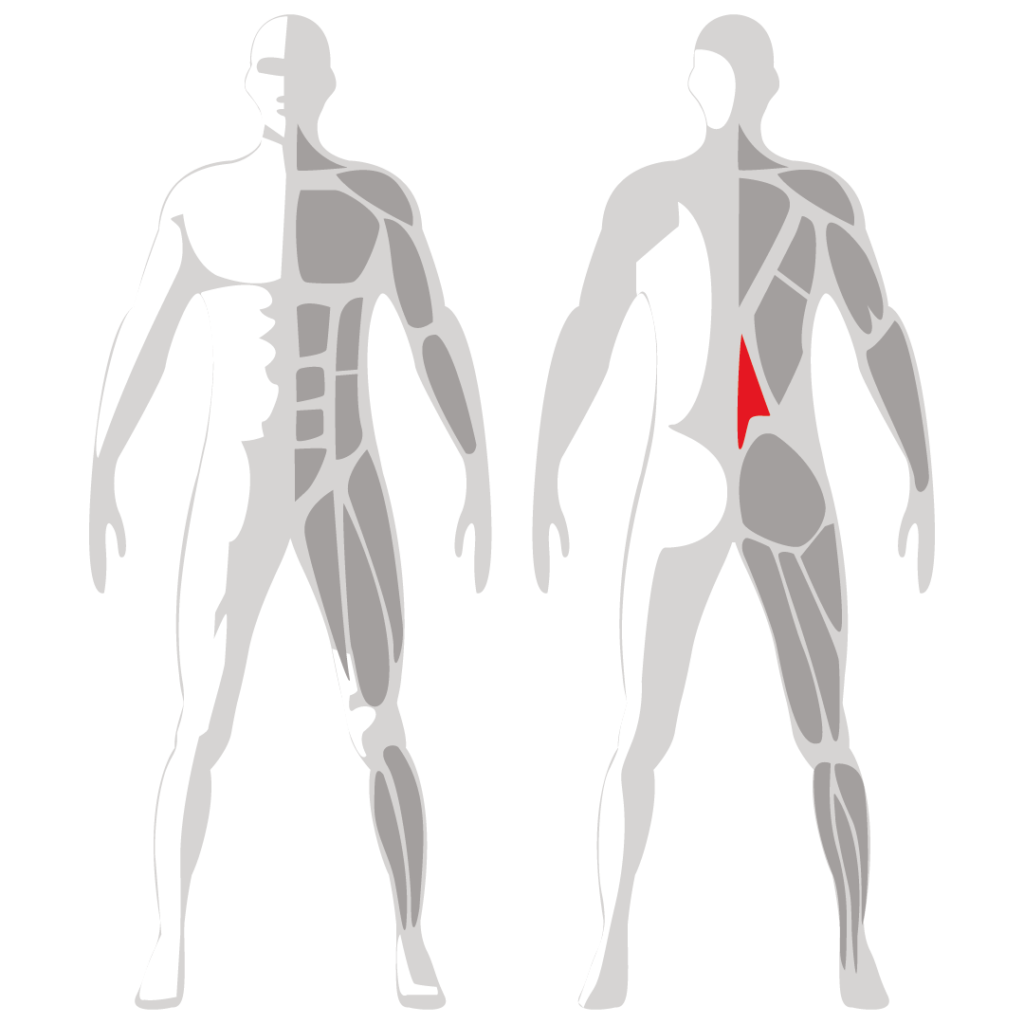
The Lower Back ROM completely overturns the logic of traditional lower-back machines, which typically force users into a fixed trajectory that does not respect spinal physiology. Conventional machines often push the user into wide, uncontrolled extensions, generating lumbar overload, loss of posture, and excessive recruitment of the paraspinals. The Lower Back, instead, follows a guided, adjustable and physiologically accurate curve that allows the lumbar musculature to work safely and without unnecessary stress.
The key differentiating factor is the active management of mobility: the Lower Back enables an effective and natural extension without throwing the user into hyperextension. This ensures depth of work while staying within a protected range. The movement feels smoother, more technical, and cleaner, eliminating the typical compensations of standard machines and making the exercise sustainable even for users with stiffness or recurring back pain.
The result is a lower-back machine truly usable by everyone: women, seniors, beginners, postural users, and individuals with recurring lumbar pain or reduced mobility. For a club, having a machine that correctly trains the most delicate area of the body becomes a real differentiator: it increases usage rate, reduces risk, and gives every user the sensation of “training well and safely.” This directly enhances perceived value in the strength area and strengthens retention.
The Lower Back is designed as a true coaching tool: it allows trainers to work with full or partial ROM, isometrics, controlled eccentrics, educational progressions, and specific protocols for lumbopelvic stability. This level of fine-tuning simply does not exist in traditional lumbar machines, which offer a single, identical movement for all users. With the Lower Back, trainers can build precise evolutionary steps tailored to each user and their functional needs.
Its guided and physiological movement makes it ideal for premium programs: posture, core stability, back-pain prevention, reconditioning and functional strength. For fragile or inexperienced users, the machine provides a safe training environment; for athletes or advanced users, it allows high-intensity, biomechanically refined work. It is the perfect tool to showcase the trainer’s expertise and the club’s high technical standards.
The Lower Back also supports technical small-group training: because it is safe, intuitive and highly adjustable, it reduces the need for constant supervision and allows small groups to maintain excellent execution quality. For a premium club, a machine that enables advanced coaching with minimal risk and clear progressions becomes a cornerstone of the value proposition.
Traditional lower-back machines are often underused because they are perceived as uncomfortable, risky or ineffective. The Lower Back completely reverses this perception: its intuitive ergonomics, smooth movement and constant protection provided by the ROM Limiter encourage the user to train without fear of injury. When a machine “explains itself” and immediately delivers a sense of safety, its usage rate increases naturally.
More users using a machine → higher commercial value per square meter.
The Lower Back is built around this principle: it expands the audience of users who can train the lumbar area effectively and safely, including women, seniors, beginners and users with recurring pain. This makes it one of the most transversal machines in the entire strength area.
High usability also generates more PT opportunities: postural programs, core-specific sessions, and back-pain prevention protocols. Every service built around the Lower Back produces additional revenue and reinforces the perception of a club that truly cares about its members’ health. Profitability increases both in usage and in services sold.
Boutique gyms, hotels and corporate gyms all share a common need: equipment that anyone can use safely, without ongoing supervision, and with minimal risk. The Lower Back ROM is ideal for these environments because it combines compactness, high safety, and a premium design that immediately communicates professionalism.
The ROM Limiter protects users from excessive range and keeps the spine within physiological limits, drastically reducing the risk of “wrong movements” that are common on traditional machines. For facilities where direct supervision is not always possible, this is an enormous advantage: users can train confidently without feeling intimidated or exposed to technical errors.
The machine’s visual impact also adds premium value: clean lines, smooth leverages and a “medical-sport” aesthetic that elevates the perceived quality of the space. In premium or corporate environments, where quality must be evident at first glance, the Lower Back communicates care, technology, and safety — key elements to attract and retain demanding users.
Lower-back pain is one of the most common issues in modern fitness: over 60% of users experience recurring discomfort at least once a year. Most traditional machines do not solve the problem — in many cases, they worsen it. The Lower Back ROM, on the contrary, is designed specifically to address this need, offering a physiological, protected, adjustable and educational movement.
A club that installs the Lower Back clearly communicates that it is not limited to “aesthetic training,” but truly cares about spinal health. This is a powerful strategic positioning: well-being, prevention, movement quality and safety. Values that distinguish a modern club from a standard fitness center.
Additionally, the Lower Back becomes the core of entire specialized programs: lumbar protocols, postural labs, core clinics, and corporate wellness modules. Each dedicated pathway generates additional revenue, increases retention, and builds a technical reputation that attracts more knowledgeable, higher-value clientele. The Lower Back is therefore a competitive asset not only for what it does, but for what it enables the club to communicate and sell.