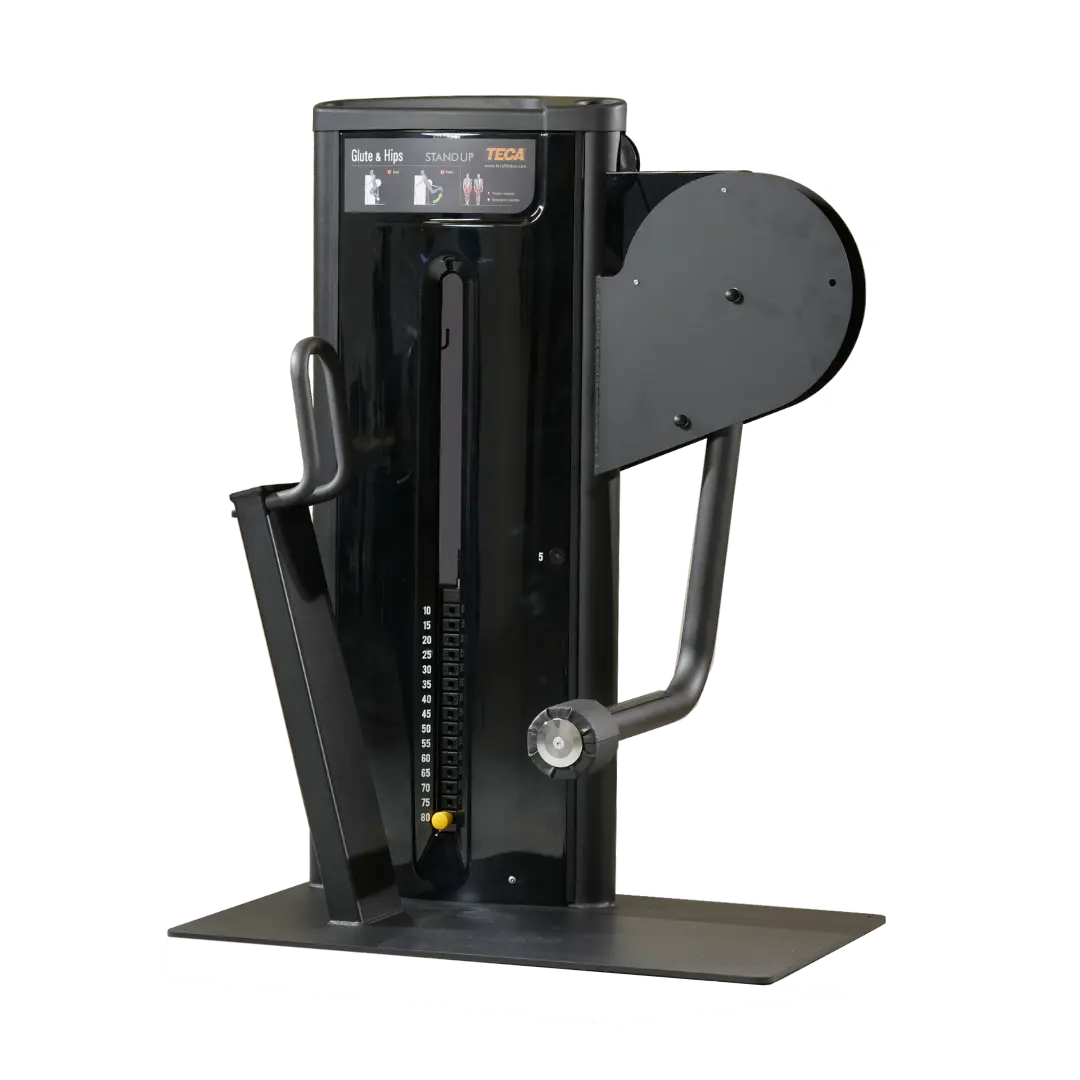
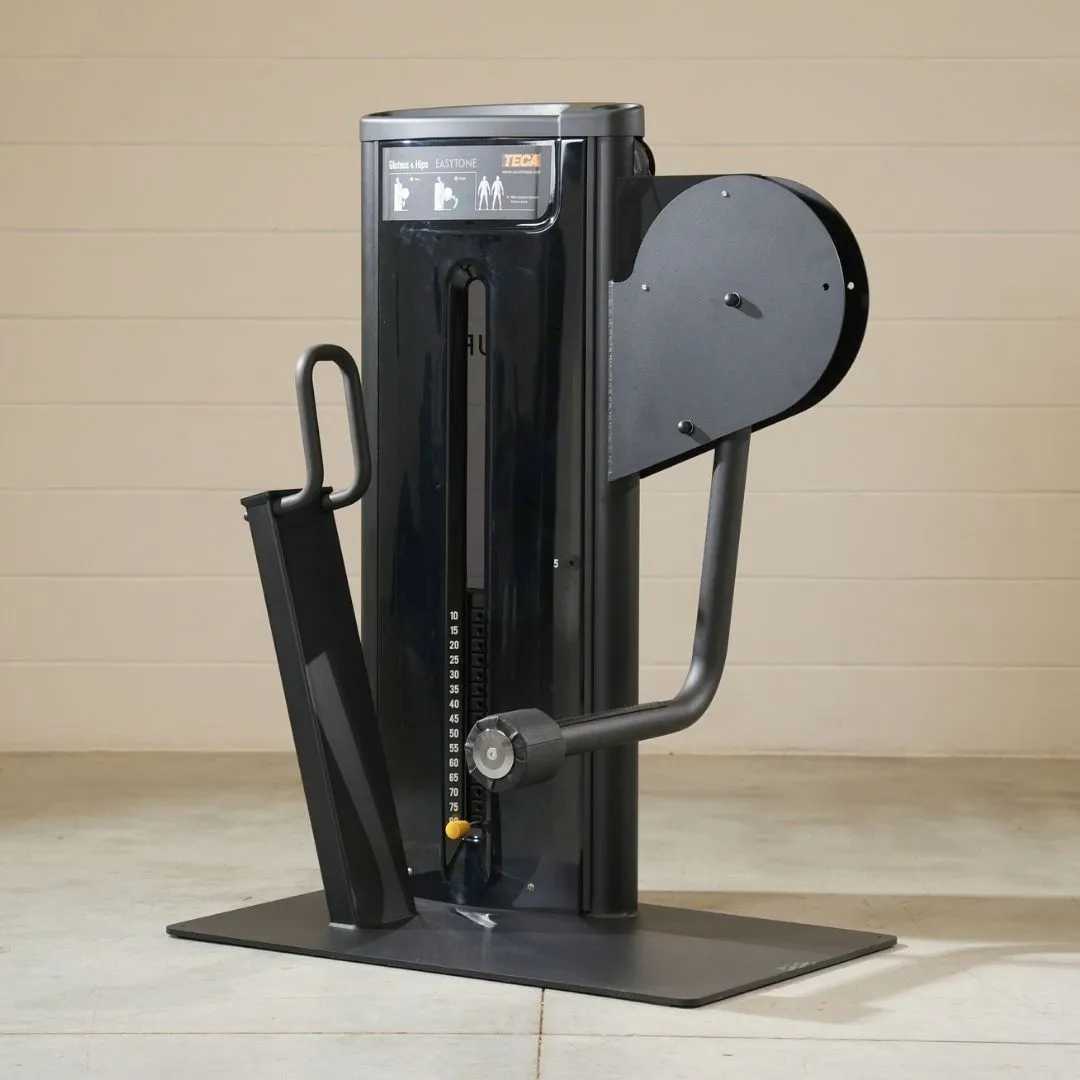
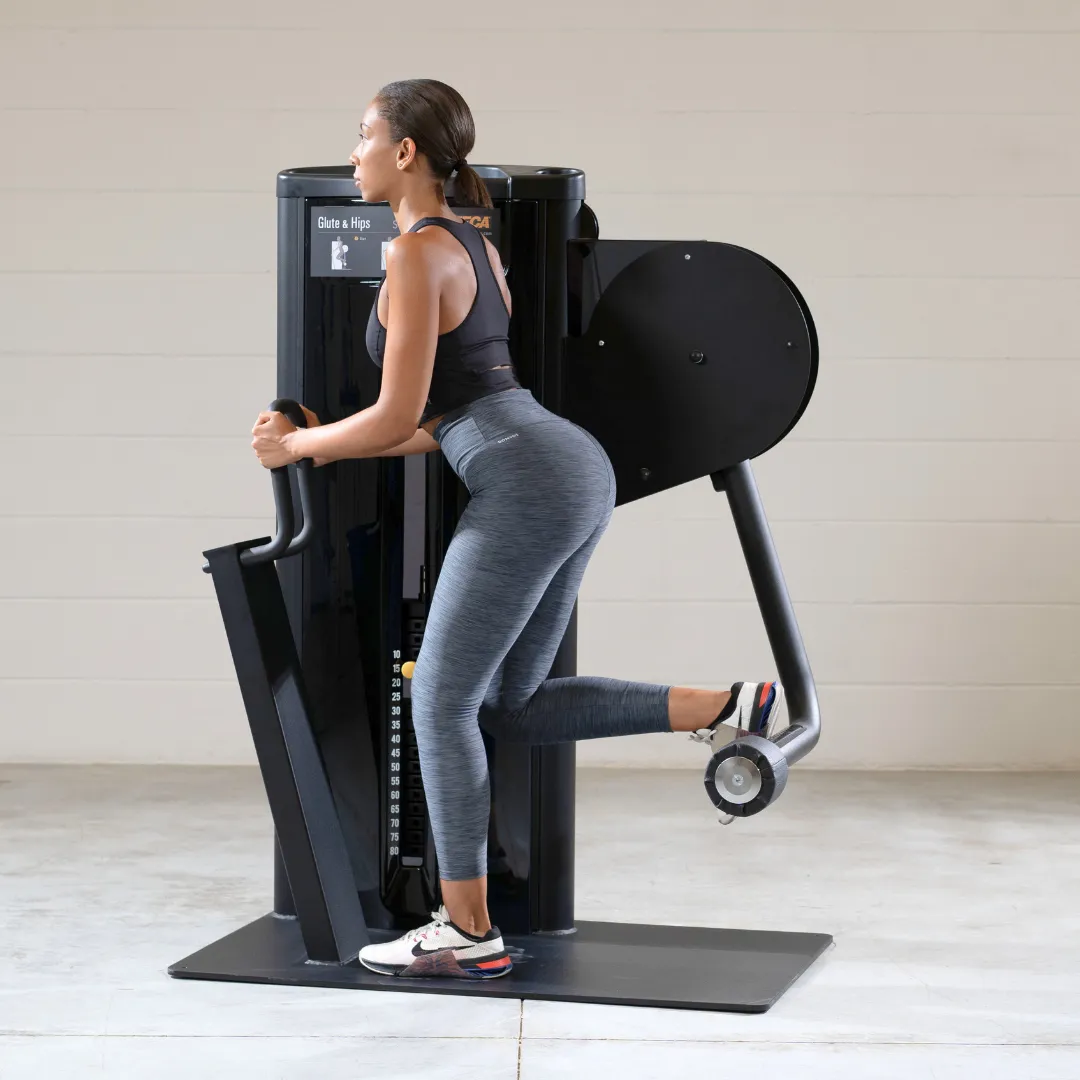
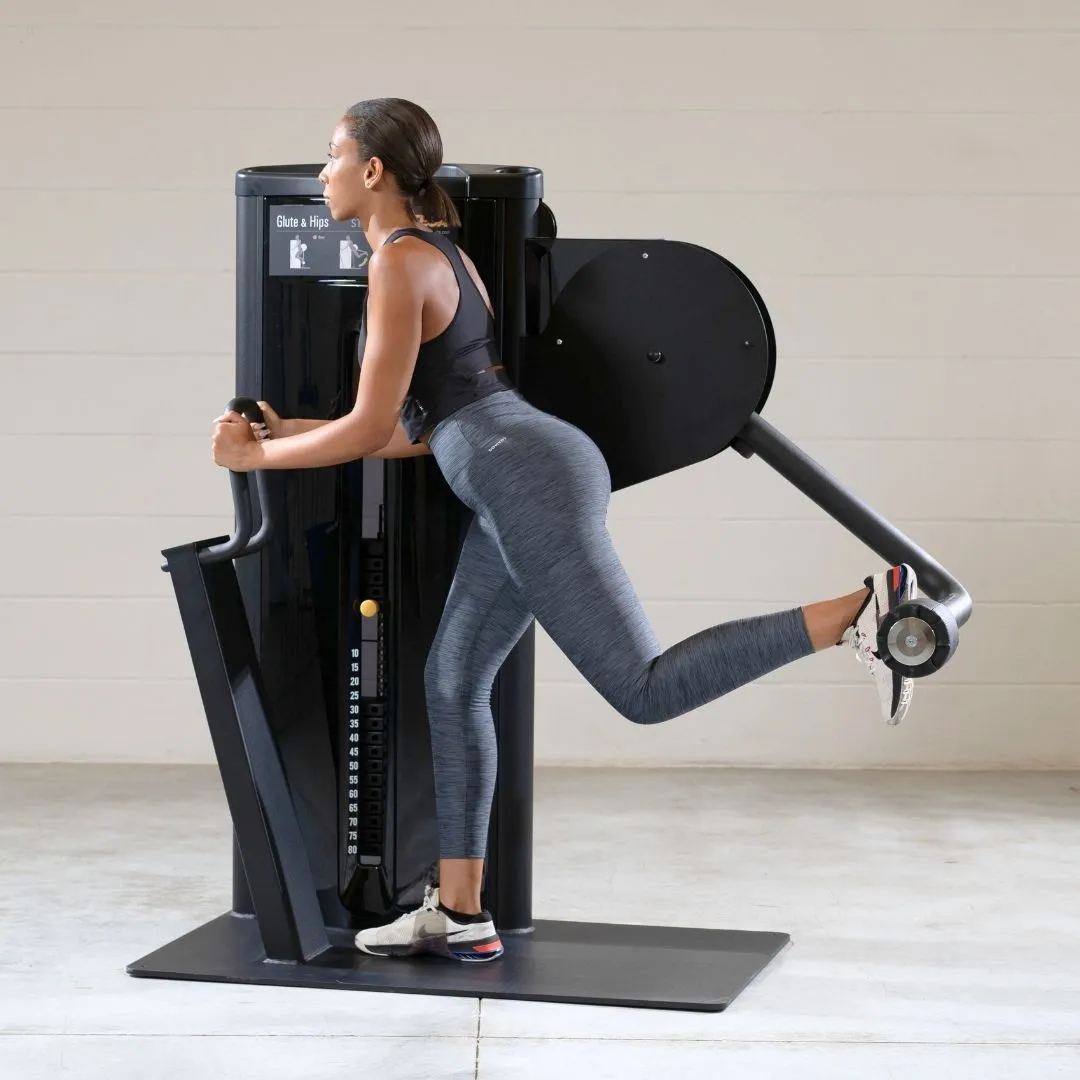
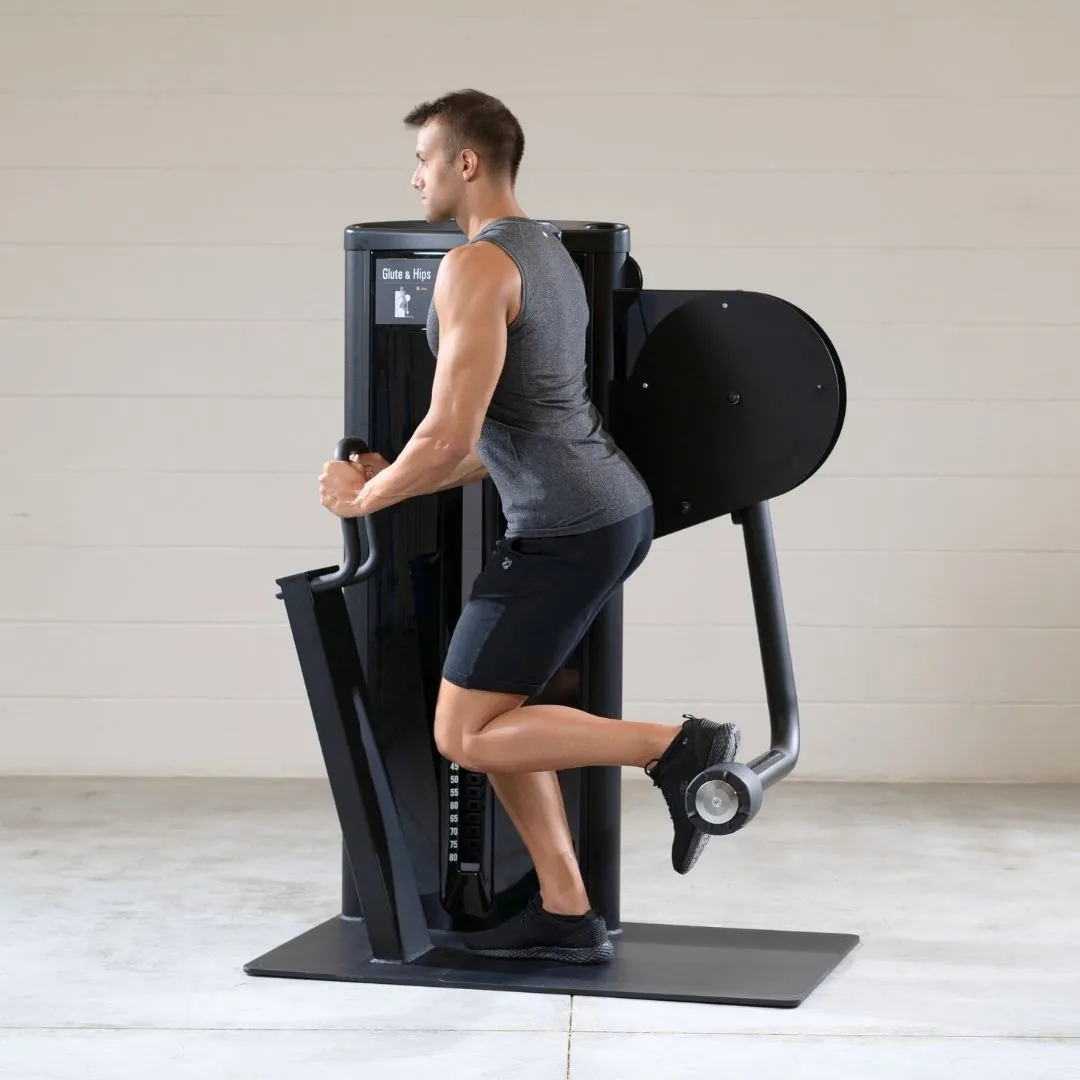
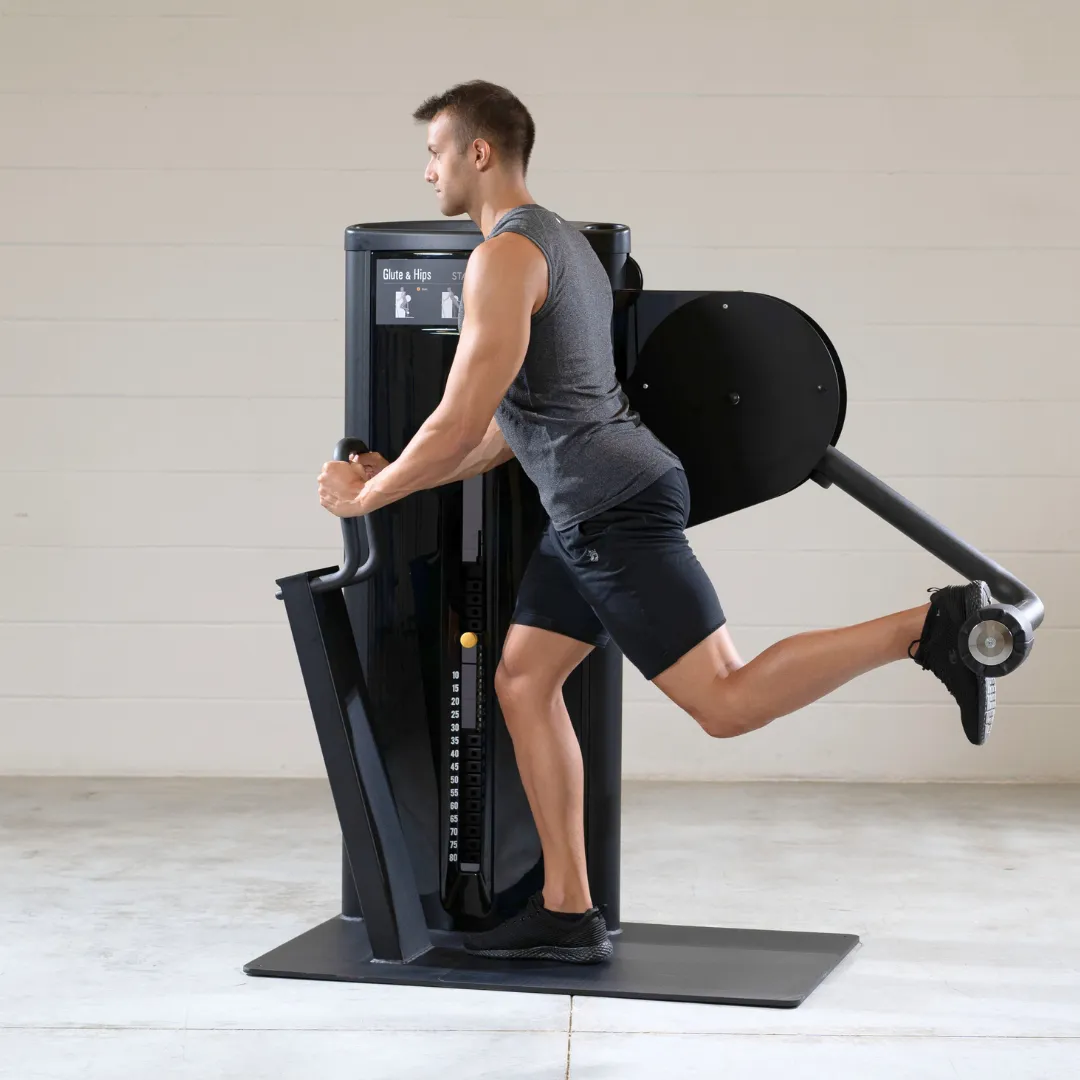
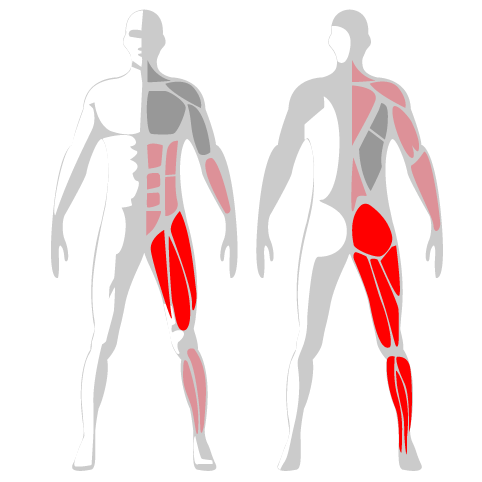
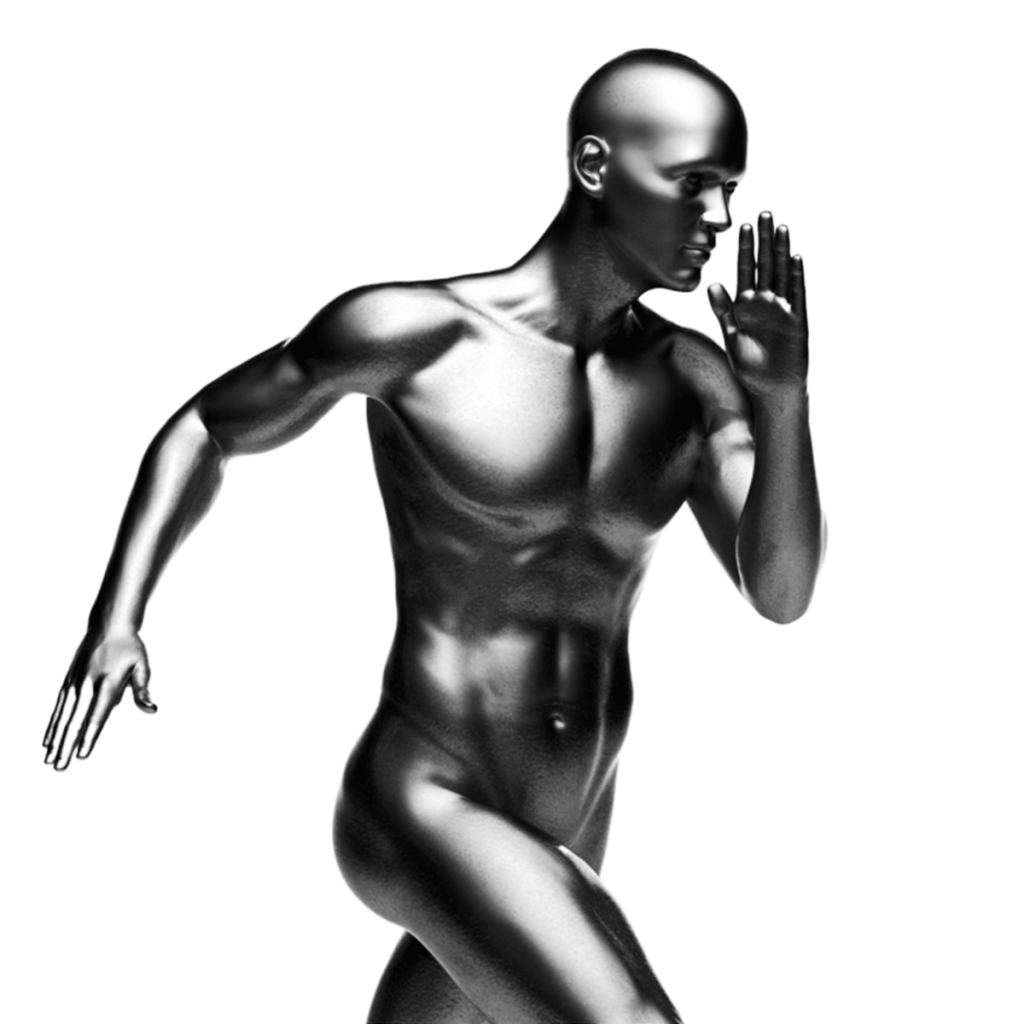
Glute&Hips StandUp moves glute training from traditional floor or cable setups to an upright context where posture and stability are more natural for most users. The drive roller and single-leg support guide hip–knee–ankle alignment, reduce lumbar compensation, and make the exercise immediately felt in the glute without guessing trajectories or wrestling with complex setups. The result is fewer barriers to use, more people trying it, and more people keeping it in their routine.
For the club this means rapid onboarding even without a trainer, less time spent on basic corrections, higher all-day rotation, and a premium perception of the strength area. From a programming standpoint, the machine lends itself to simple but effective progressions (partial → full ROM, isometrics → dynamics, increasing time under tension) that deliver visible, measurable results—the combination that most influences retention and renewals. In short: Glute&Hips StandUp turns a highly demanded goal (glute shape) into an intuitive, safe, clearly “felt” experience, multiplying value per square meter.
Economically, a stand-up machine shortens setup time and reduces minutes of member assistance: users step in, perform, progress. That frees staff for higher-margin activities (PT, assessments, upsell) and increases hourly turnarounds without bottlenecks. The upright ergonomics also suit segments that typically avoid “technical” glute work, expanding the active user base—not just the potential one.
Visual impact counts too: the StandUp area is recognizable and photogenic, improves the sales tour, and supports price-premium positioning. The message is easy to communicate effective glute work, no back pain, in an elegant, immediate station. Fewer explanations, more trials, more memberships closed on the first visit.
Yes—because it enables clear, scalable, repeatable protocols in groups of 3–6: stepwise ROM progressions, guided isometrics, tension blocks with active pauses, and controlled unilateral variants. The instructor manages few corrections thanks to upright posture and stable support: fewer interruptions, more value coaching, higher quality perception.
Financially, small groups with Glute&Hips StandUp command a higher ticket than generic classes: they promise a desired, measurable outcome (glute shape, pelvic stability, core control). With 6–8 week cycles, photo checks, simple KPIs, and predefined progressions, the club gets steady fill, strong hourly margin, and a natural pipeline into premium 1:1 program for those seeking the next level.
Logistics favor margin: near-zero dead time, fast transitions, short briefings. With 30–40-minute formats you can stack peak-time slots tightly, keeping perceived quality high and hourly profitability strong. The lack of complex setup reduces the risk of “messy” classes and makes instructor substitution easier without experience drop-off.
Lastly, small-group packages with a clear aesthetic promise generate shareable social content and testimonials that fuel demand. A persistent waitlist lets you maintain firm pricing, reduce discounts, and lift ARPU in the class segment without increasing fixed costs.
The main obstacle for these segments is fear of bad technique or back strain. Working upright with guided support makes execution intuitive: place the foot, set the hip on the roller, push, and you feel the glute from rep one. No straps to wear, no complex setups, no uncomfortable floor positions—the psychological barrier collapses.
This translates into higher trial rates in the first weeks (the most critical period for dropout), a better experience for women and novices, and fewer assistance requests to staff. In parallel, organic word-of-mouth rises: easy-to-read social clips, week-by-week progress, and friend-to-friend invitations create a long tail of qualified leads arriving already motivated to try “that standing glute machine.”
Operationally, onboarding and adherence improve with micro-formats: 14-day ramp with ROM progression, mini printed guides, QR video tutorials, app reminders. Users quickly experience safety and control, feel the target muscle, and return independently on subsequent days without front-desk help.
For the club it’s a double win: fewer “hand-holding” demands at peak times and stronger consistency of area usage. Less technical friction = more completed sessions = more visible results = higher retention.
It’s a versatile platform. In aesthetics, it supports 6–8 week tension blocks with ROM progression, structured time under tension, and unilateral work for right/left symmetry. For posture and late-stage return-to-train, the upright setup allows gradual reintroduction of load on hip and pelvis with isometrics, controlled partials, and progressive range—minimizing lumbar compensation.
For sport users, it sustains performance blocks targeting hip power, pelvic control, and injury prevention at knee/lower back. The club can package this into clear, monetizable offers: Glute Aesthetics Pro, Pelvis & Core Clinic, Lower Return-to-Training, Hips Performance. Each path includes simple KPIs (volume, TUT, range, perception), easing sales, renewals, and results communication.
Integration with the rest of StandUp is straightforward: combine Glute&Hips with upright rowing or traction to build smart low-impact circuits, preserving technical quality while keeping a high cardio-metabolic feel. This produces proprietary formats that are recognizable and defensible in the local market.
Standardizing protocols reduces delivery variance across instructors, raises average quality, and makes the offer scalable. With a clear playbook (session template, progression, quick tests) the service becomes more replicable, hence more sellable—and more profitable.
It’s photogenic and self-explanatory: upright gesture, clean lines. Social content instantly conveys “effective glutes, no back pain,” improving campaign CTR and the quality of leads entering the tour. The StandUp zone becomes a natural set for glute open-days, 21-day challenges, and trial packs with free assessments—formats that convert because they promise a clear result in defined time.
From a brand perspective, Glute&Hips StandUp signals technology, biomechanical care, and genuine attention to female and beginner experience—decisive segments for any club’s growth. That supports a higher average price (premium perception), increases upgrades to annual memberships, and strengthens the distinctive image of the floor: not just another gym, but the place where glute training is more effective, safer, and easier to sustain.
It also activates a credible stream of user-generated content: short clips of first reps, week-over-week progress, post-session feedback. This fuels newsletters, landings, and in-club signage, shortening the decision cycle for fence-sitters and improving visit-to-join conversion.
The outcome is a clear value chain: more organic and paid visibility, more trials during the tour, more membership conversions, and more renewals driven by results. The machine is not only a training tool; it’s a permanent marketing lever working daily for the club’s positioning.