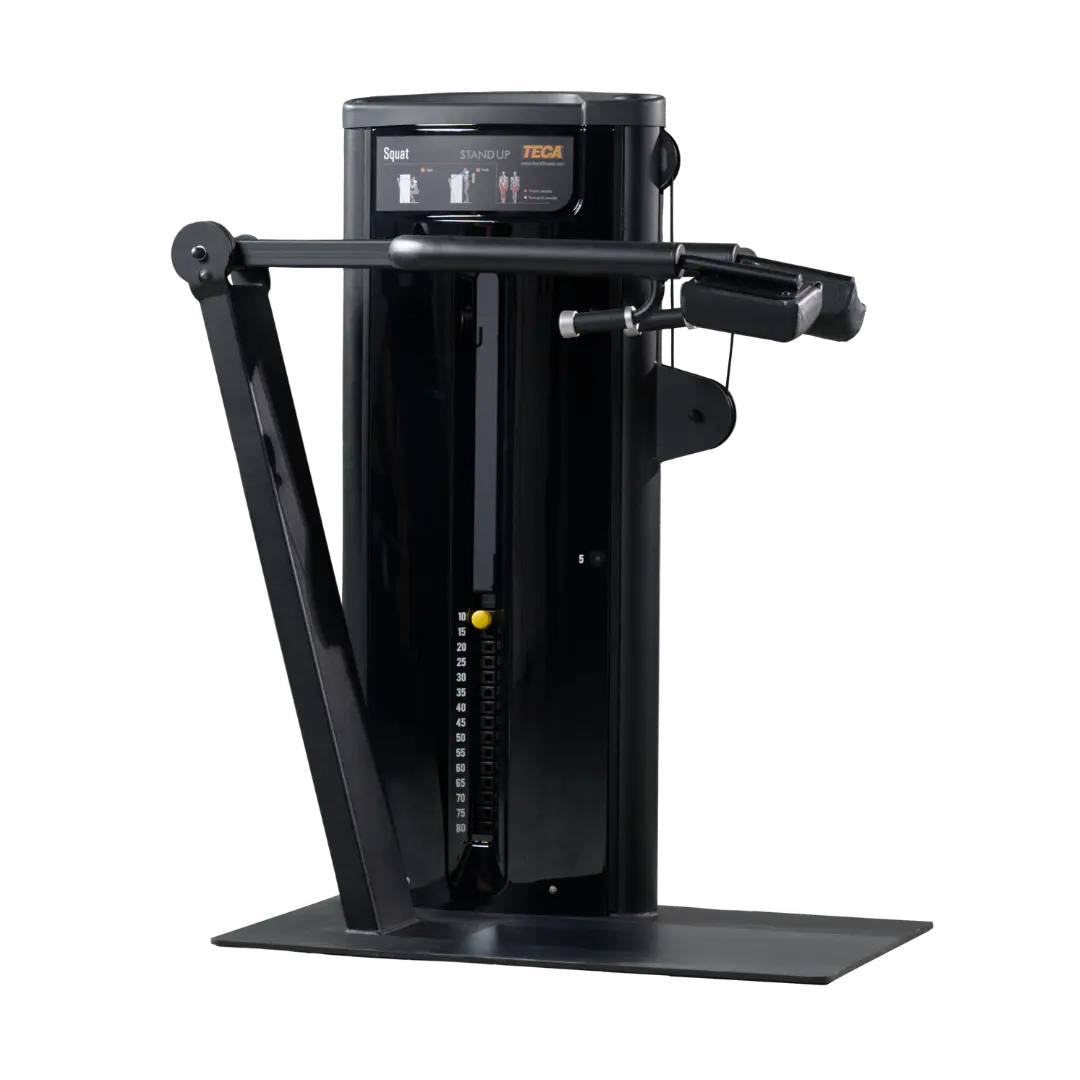
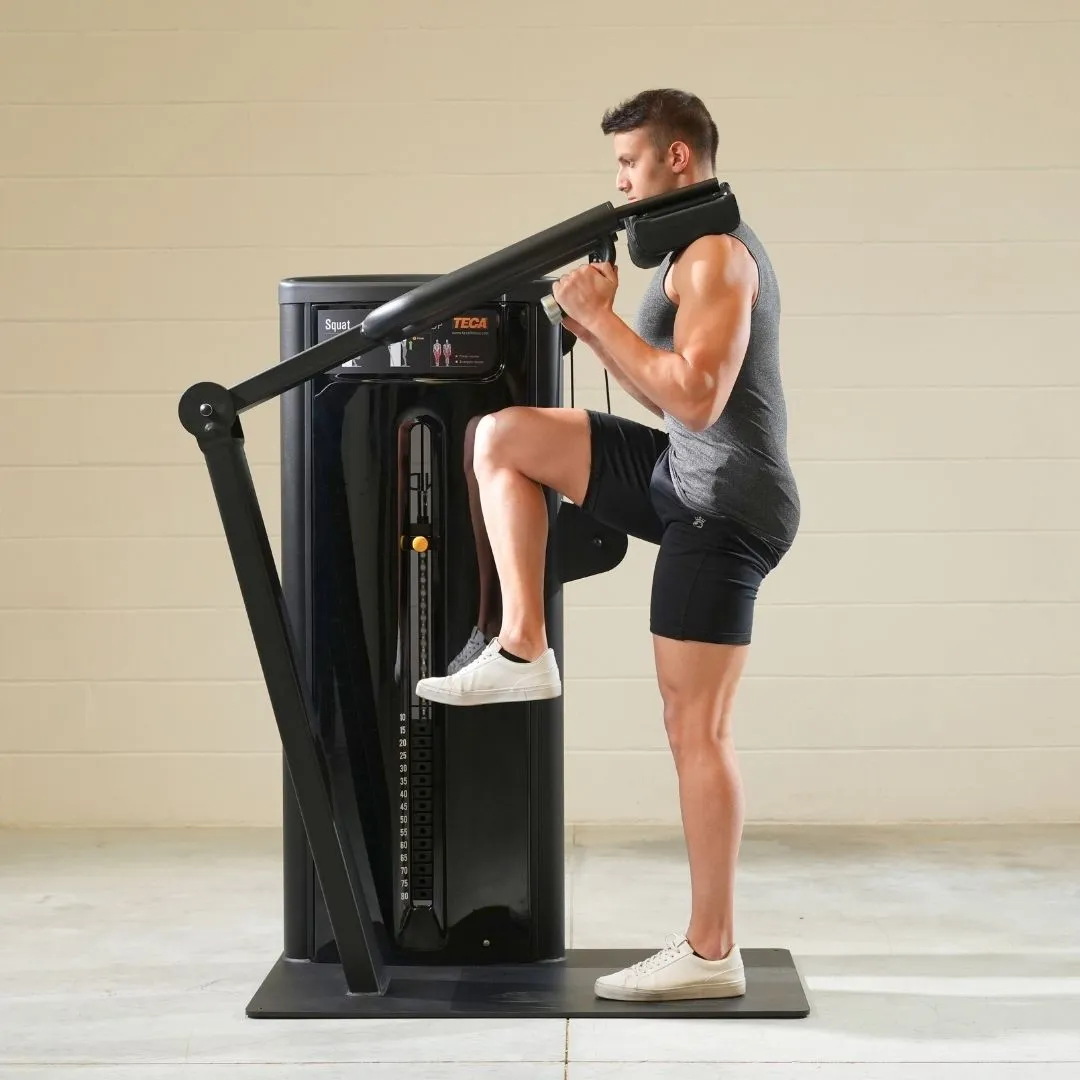
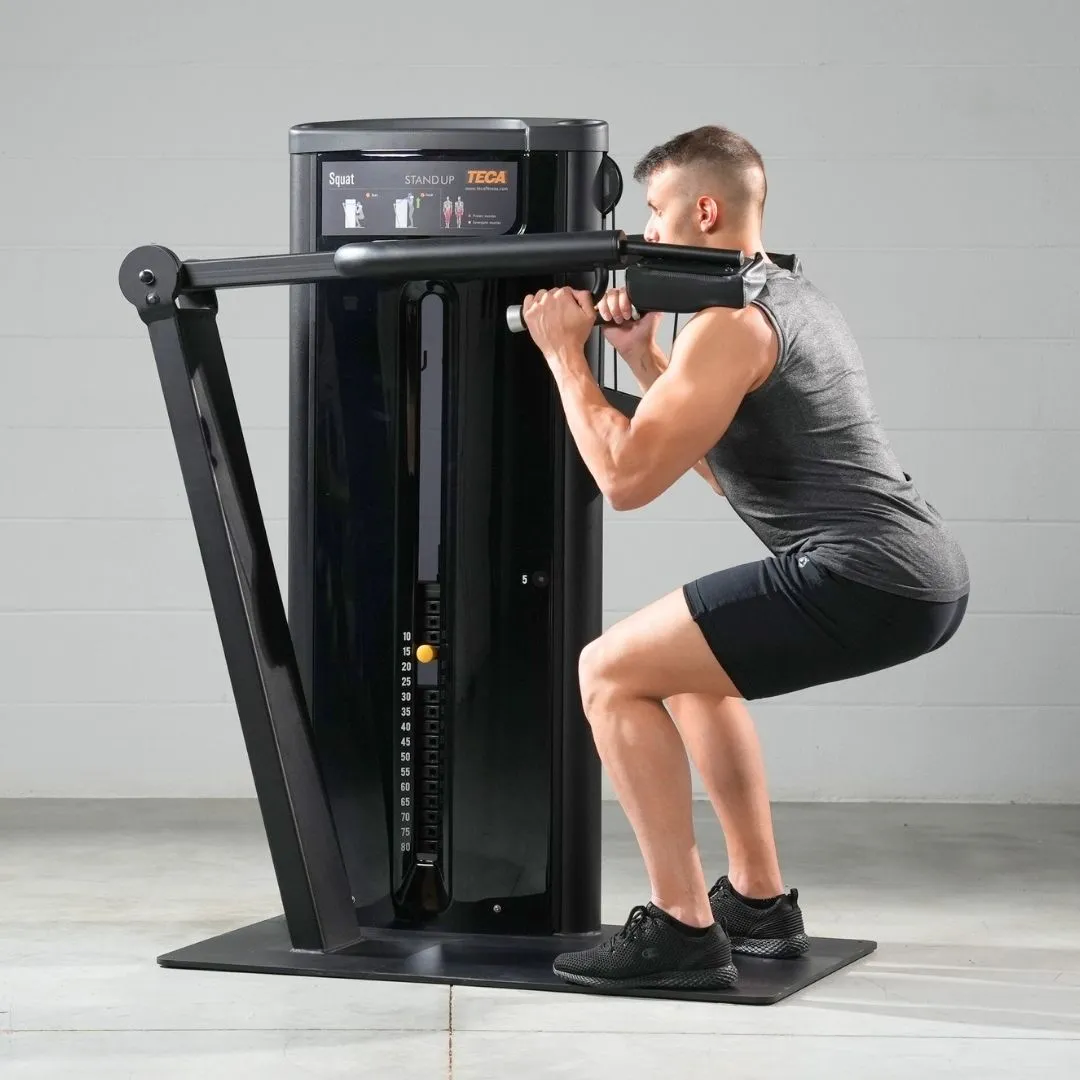
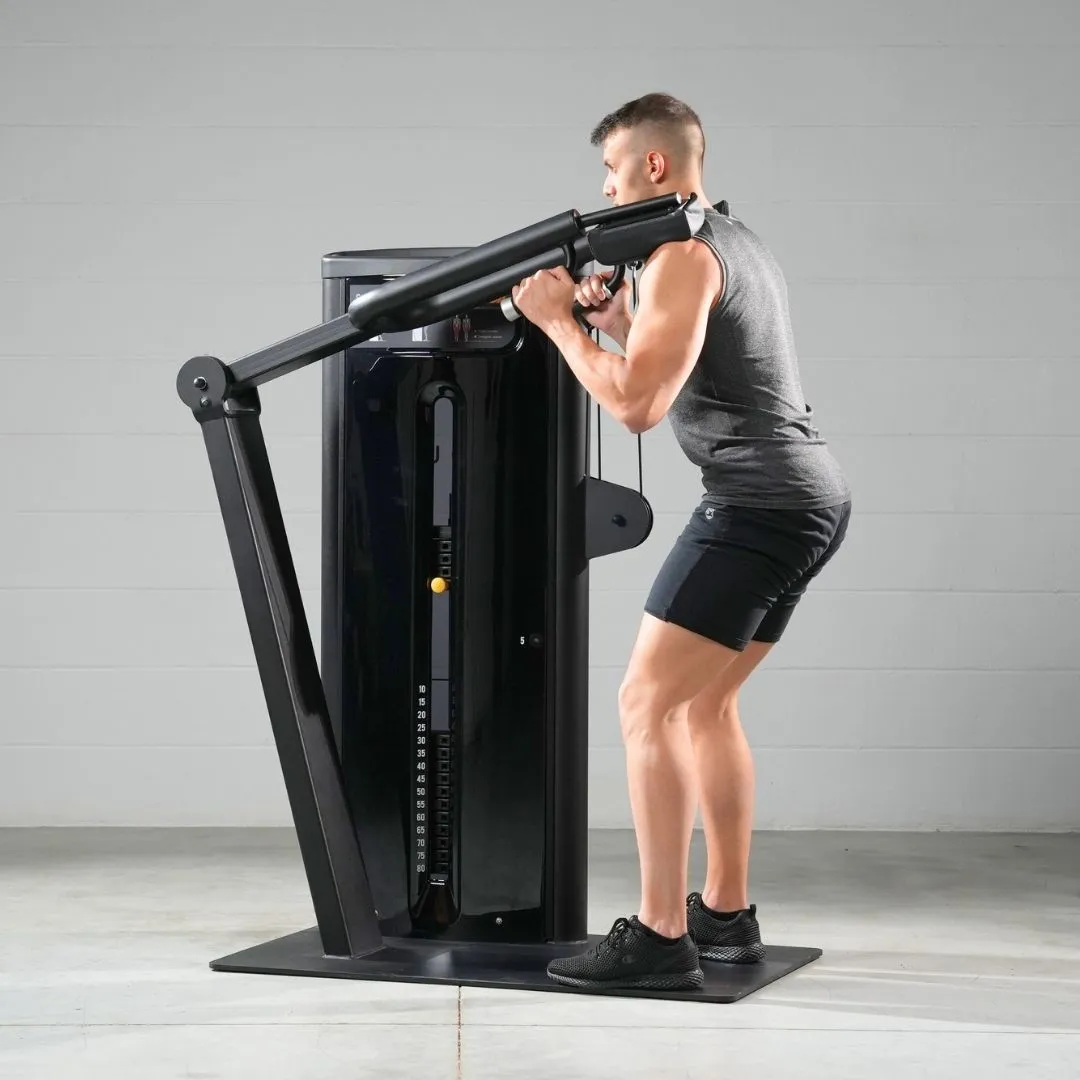
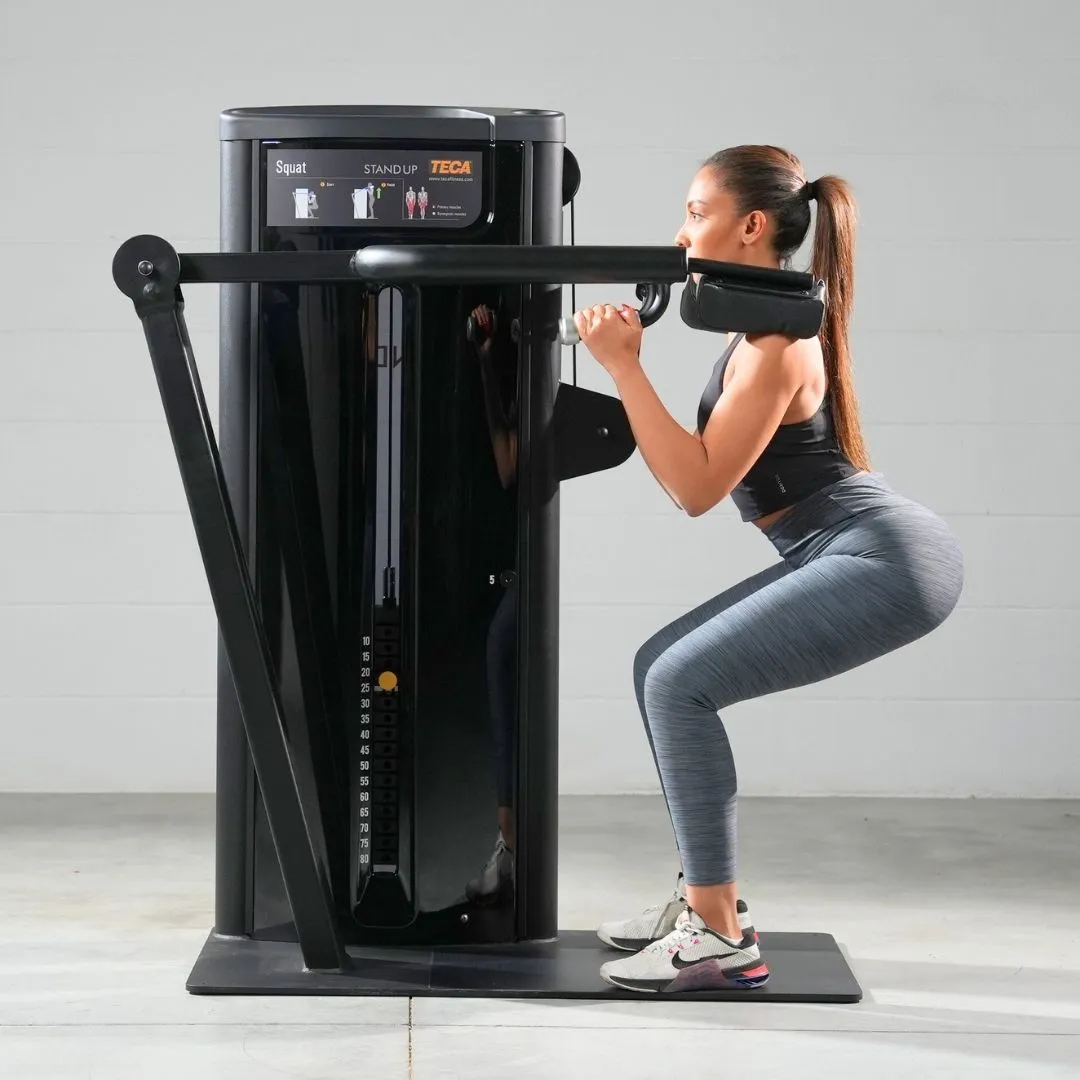
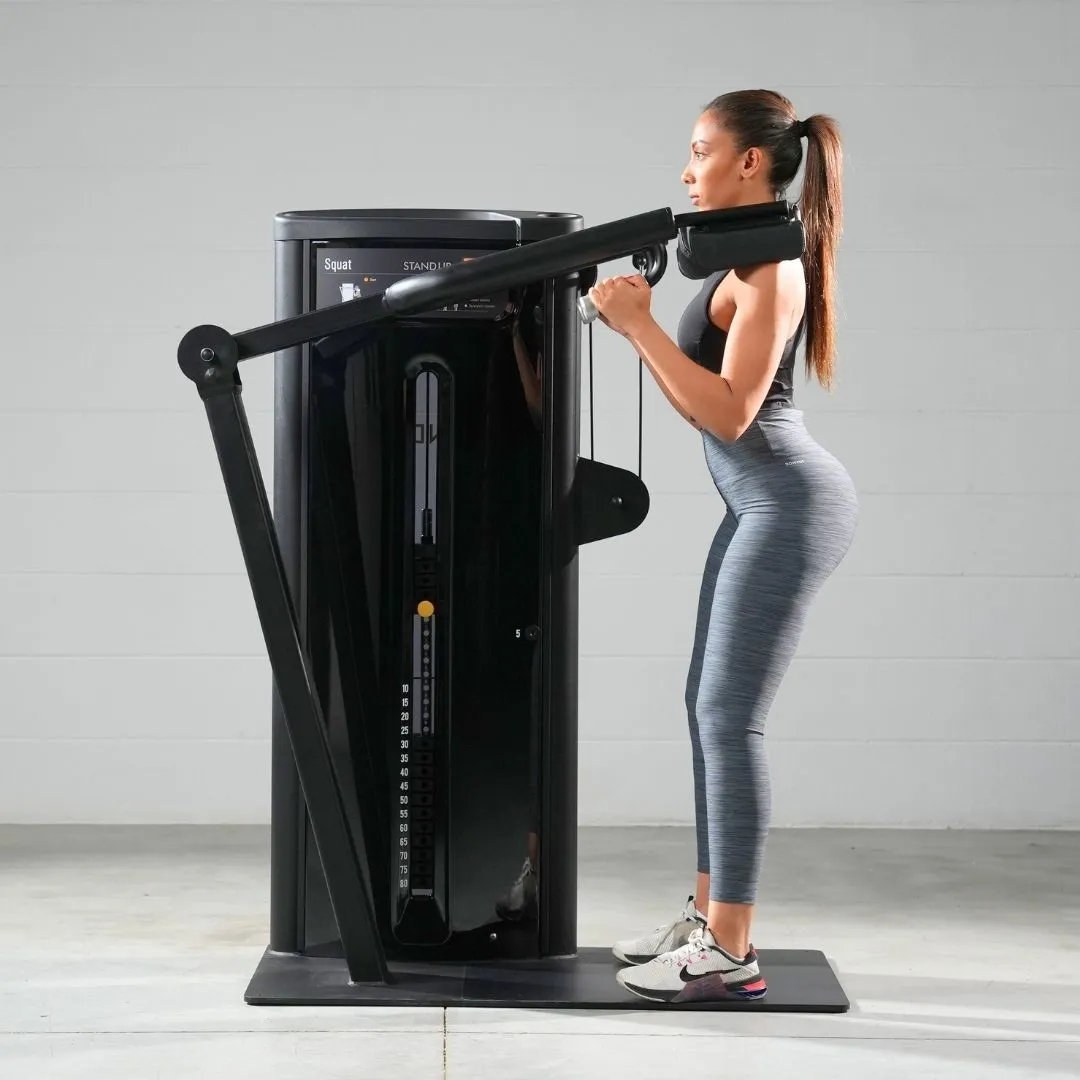
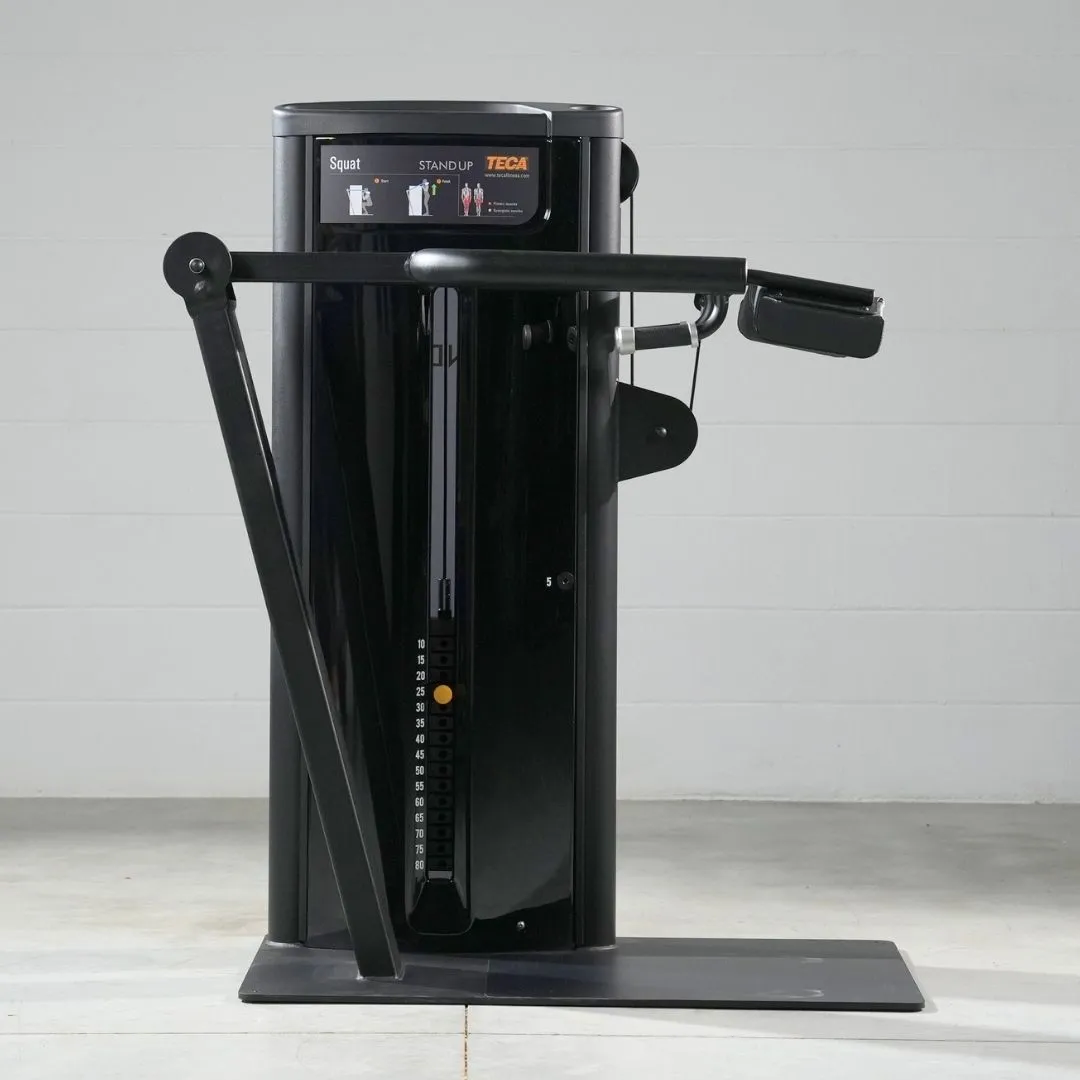
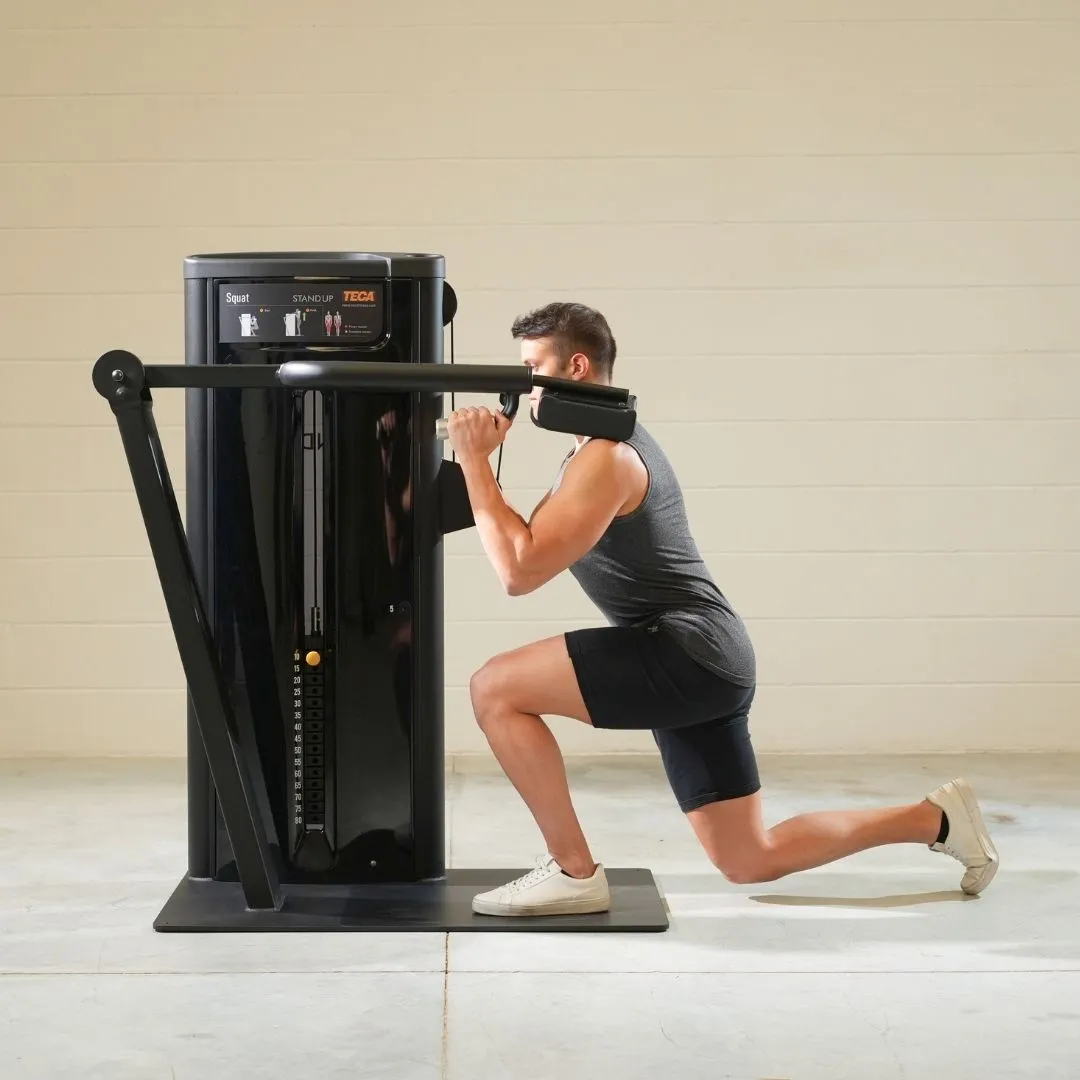
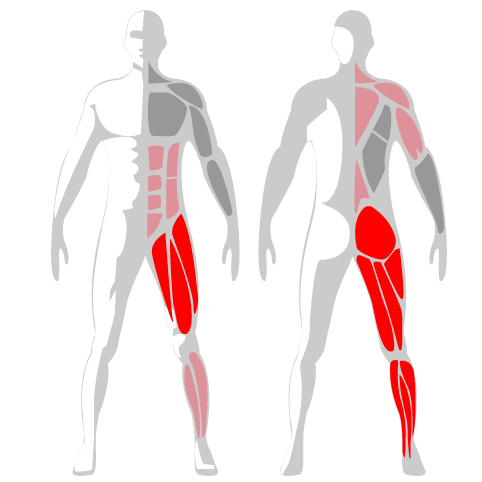
The Squat StandUp turns squats from a “for the few” exercise into a daily protocol for the majority of members. Standing posture removes technical barriers (barbell setup, fear of load, lumbar compensations), makes the pattern more intuitive, and delivers instant quad and glute engagement. Operationally, that means more people use it, more often, with fewer errors and fewer help requests.
On the business side this drives high rotation all day long, higher value per square metre, and a customer experience that boosts retention and word of mouth. In practice, the machine doesn’t occupy space: it produces recurring revenue. It also levels quality between advanced and beginner users, reducing staff time wasted on basic fixes and stabilising service standards.
In numbers, a machine that removes technical complexity typically increases hourly uses by 30–50% versus equivalent traditional stations: more completed sessions, more sellable programs, fewer queues. This lets you reallocate instructor time to higher-margin activities (PT, progress checks, upsell), improving the P&L without increasing payroll.
The Squat StandUp is a coaching platform: it enables strength progressions (isometrics, slow eccentrics, clusters), motor-control work (knee–ankle alignment, footwork, symmetry), post-injury reconditioning protocols, and sport-performance variants (pre-activations, upright finishers). Each stream can be packaged into clear, sellable programs.
This lifts PT average ticket size: programs like “Squat Skills – 4 Weeks,” “Glute Progress,” or “Knee-Friendly Strength” convert well because they pair immediate sensations with easy-to-communicate progress metrics. Coaches coach more and correct less; clients see rapid results; the club monetises both session-by-session and via cyclical packages.
Marketing benefits too: the machine generates demonstrable content—ROM and stability before/after, safer depth improvements, longer time under tension—making seasonal campaigns and bundles with other services (technical assessments, nutrition, recovery) straightforward, multiplying entries into premium pathways and per-client margin.
Verticality frees floor area and streamlines flow: fast setup, quick user turnover, and less footprint than seated stations or multiple racks. In compact zones you introduce a high-demand “big lift” without bottlenecks, keeping hourly productivity high.
For the club this means leaner station circuits (30–40 minutes), more sessions completed per square metre, and a modern look that signals quality. Fewer machines to deliver the same training volume lowers CAPEX and simplifies OPEX; higher uses/hour and more users served in the same space produce a tangible ROI within the first months.
Practically, with 1–2 Squat StandUp units you can run small-group classes and express formats in peak hours without saturating the floor. High rotation turns the unit into a flow magnet, reduces perceived crowding, and supports premium pricing on day passes and top-tier memberships.
By reducing barbell intimidation and technical complexity, the Squat StandUp makes squats inclusive for female targets focused on aesthetics and joint wellbeing. It’s easy to integrate targeted activations (footwork, abduction, bottom-position holds), extended time under tension, and progressions that emphasise glutes and posterior chain without stressing the neck and lower back.
For a Women’s Boutique this translates into high-margin small-group formats (“Glute Shape 30,” “Lower Body Sculpt,” “Legs & Balance”) with visible week-over-week progress and photo/video-friendly content. Adherence improves, renewals rise, and the premium offer becomes more credible: clear programs, immediate sensations, measurable results.
Commercially, the machine enables seasonal vertical packages (pre-summer, wedding, advanced post-partum) and special memberships focused on lower-body aesthetics. The high satisfaction of use reduces early dropout in the first 60–90 days—the most critical churn window—and increases customer lifetime value.
The pattern is self-explanatory: natural posture, clear trajectory, immediate muscular feedback. This eliminates most micro-corrections typical of traditional squats (bar position, bracing, bar path), freeing precious staff minutes precisely when the gym is busiest.
Operationally, that means fewer extra staff in peaks, lower technical risk, and more time for high-margin tasks (PT sales, progress checks, consultations). Experience quality stays high even under load, because the machine standardises execution and reduces basic errors. Less supervision for the same—or better—quality equals efficiency that directly benefits the bottom line.
A simpler, more gratifying experience also lets you shift part of onboarding to short digital assets (QR, micro-videos, smart signage), cutting live training time. Less initial friction = more member autonomy = fewer staff requests in critical time slots.